

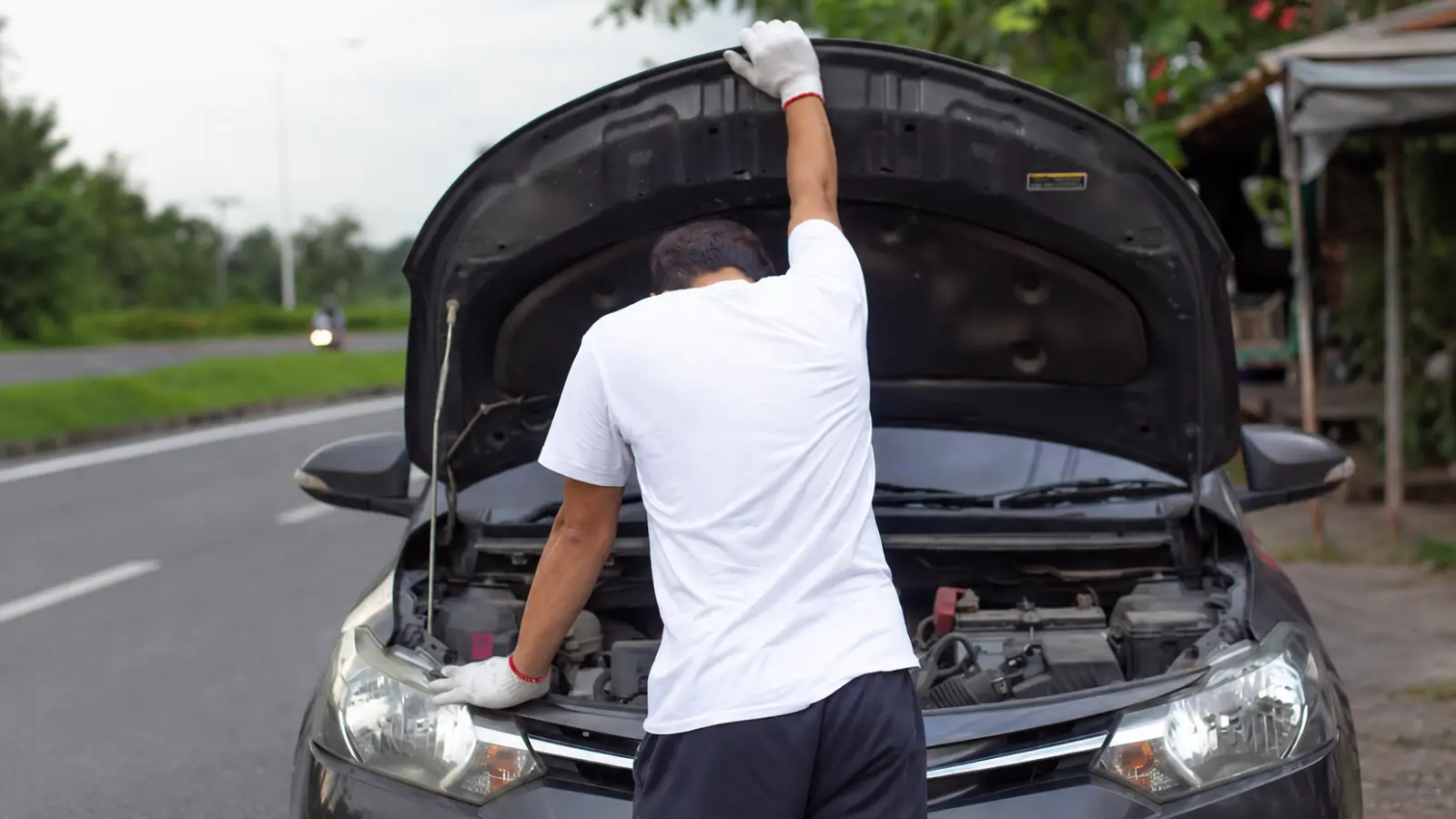
A dead car battery can leave you stranded at home, in a parking lot, or on the side of the road. If your car won’t start, the first priority is making sure you’re in a safe location before checking for visible battery damage or attempting a jump-start. Knowing what to look for can help you avoid unnecessary risks and choose the right next step.
Common warning signs include slow cranking, rapid clicking, dim dashboard lights, or a complete loss of electrical power. However, these symptoms don’t always mean the battery has failed. Loose connections, starter problems, charging-system faults, and other mechanical or electrical issues can produce similar behavior.
This guide explains what to do when your car battery dies, how to recognize important warning signs, and when a jump-start, compatible charger, or roadside assistance may be appropriate. You’ll also learn what to check after the engine starts and why testing matters before deciding to replace the battery.
The First Minute: Get Safe Before You Open the Hood
Where you are matters more than what is under the hood. At home or in a parking lot you have plenty of options. On a busy road or highway shoulder, your priority is staying visible and protected, not fixing the battery.
Set the parking brake and put the car in Park or Neutral as applicable. If the electrical system still works, turn on the hazard flashers. On a busy road, official guidance from state safety agencies such as the Michigan State Police is generally to stay in the car with your seat belt on and call for help. If you do have to get out, check your surroundings first and keep well clear of traffic lanes. Do not make cable connections or work under the hood beside moving traffic, and do not try to push the car into traffic.
If the vehicle is a hybrid or EV, do not confuse its high-voltage propulsion battery with the small 12-volt battery that can also keep the vehicle from powering up. Use the owner’s manual and the designated jump points, never touch orange high-voltage cables, and let a qualified shop handle anything beyond the 12-volt system.
Check the Battery for Damage First
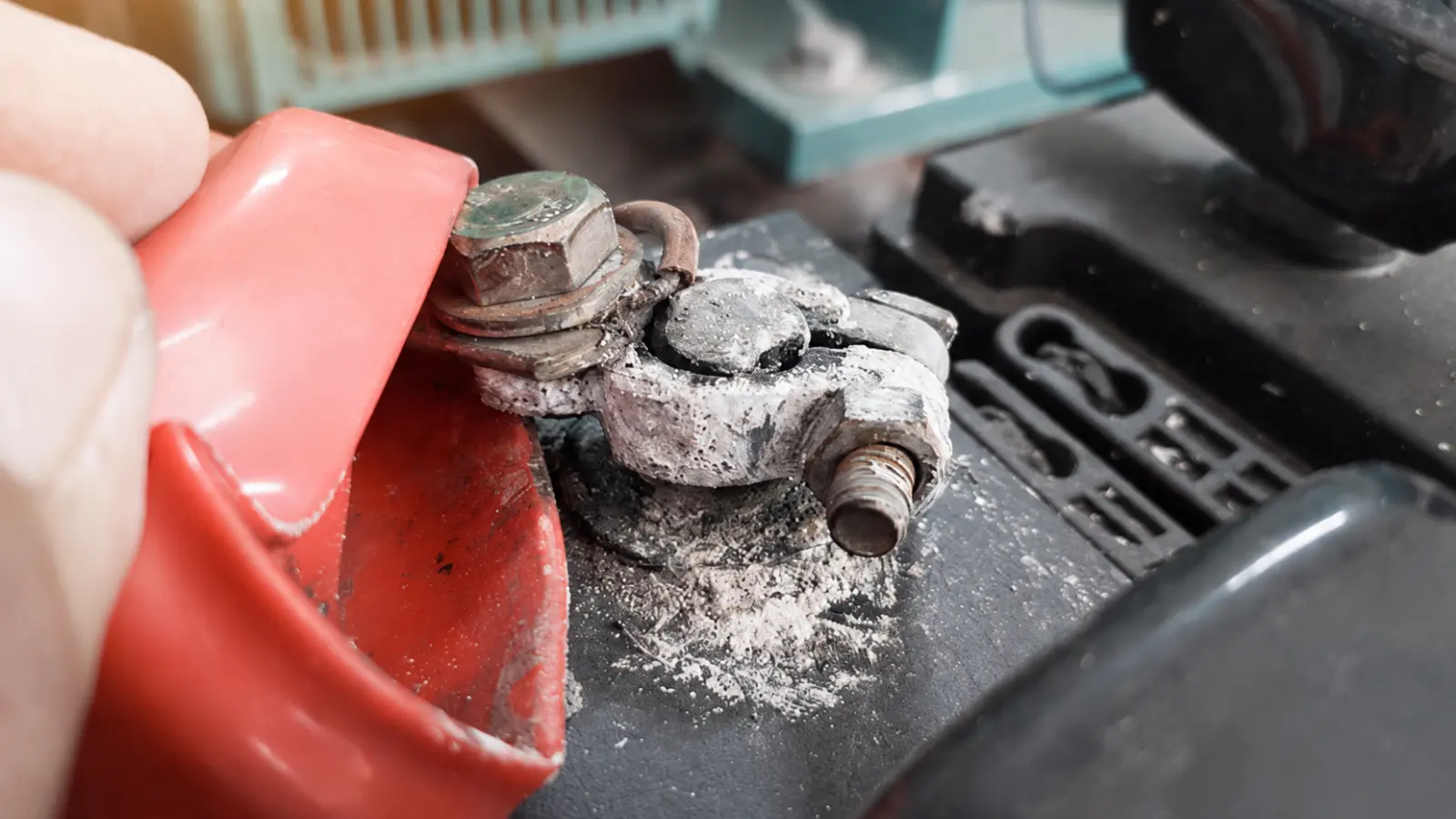
Before you connect anything, look at the battery from a safe distance. If you see a cracked case, bulging or swelling, fluid leaking, smoke, unusual heat, or you smell a strong rotten-egg odor, do not touch it or connect equipment. AAA also warns against charging or jump-starting a frozen battery, which can show up in cold weather as a bulging case or ice in the cells, because it may rupture or explode.
Also glance at the cables without pulling on them. Loose-looking clamps, damaged insulation, or heavy corrosion can cause a no-start by themselves and can make a jump attempt inappropriate until the connection is looked at. Never bridge a bad connection with improvised wire or a tool held across the terminals.
Stop and get help: a leaking, cracked, swollen, frozen, smoking, very hot, or strongly sulfur-smelling battery is not a DIY jump-start candidate. Keep flames and sparks away from the area.
Read What the Car Is Telling You
Two free checks come first. Make sure the shifter is fully in Park or Neutral, and on a push-button car confirm your foot is on the brake and the key fob is inside. Many vehicles will not crank otherwise, and the owner’s manual lists the exact conditions and the backup method for a weak fob.
Then notice how the car behaves when you try to start it. These patterns are clues, not a diagnosis.
| What You Notice | What It May Point To | Reasonable Next Step |
|---|---|---|
| No dash lights, no dome light, no sound | A very discharged battery, or a loose, corroded, or disconnected connection | Check the clamps visually. With no damage signs, a jump or charger is reasonable. |
| Slow, labored crank, or dash lights dim sharply when you turn the key | A low battery is plausible. Corroded terminals, cold weather, and starter-circuit problems can look similar. | Treat it as a likely battery no-start if there is no damage. |
| Rapid clicking | Often seen with a low battery, though a poor connection can do the same | Same as above. Do not keep cranking. |
| One click while the dash lights stay bright | The starter, its connection, or a key or shifter-interlock issue. A battery is less likely. | Do not keep boosting. Arrange a diagnosis. |
| Cranks at normal speed but will not start | A fuel, ignition, immobilizer, or engine problem rather than a low battery | Skip the jump and get a diagnosis. |
One caution: bright interior lights do not prove the battery is healthy. Lights draw far less current than the starter, so a battery can power them and still be too weak to crank the engine.
Choose the Right Immediate Action
Match your situation to the row below. If two rows apply, follow the more cautious one.
| Situation | Best Next Step | Avoid |
|---|---|---|
| Battery is cracked, leaking, swollen, frozen, hot, smoking, or smells strongly of sulfur | Stop, keep sparks away, and arrange professional roadside help or a tow | Jumping, charging, opening, or moving it by a damaged case |
| Vehicle is in an unsafe or exposed spot | Hazards on, stay belted in the car, and call roadside assistance. Use 911 if there is immediate danger. | Cable work beside traffic or in a travel lane |
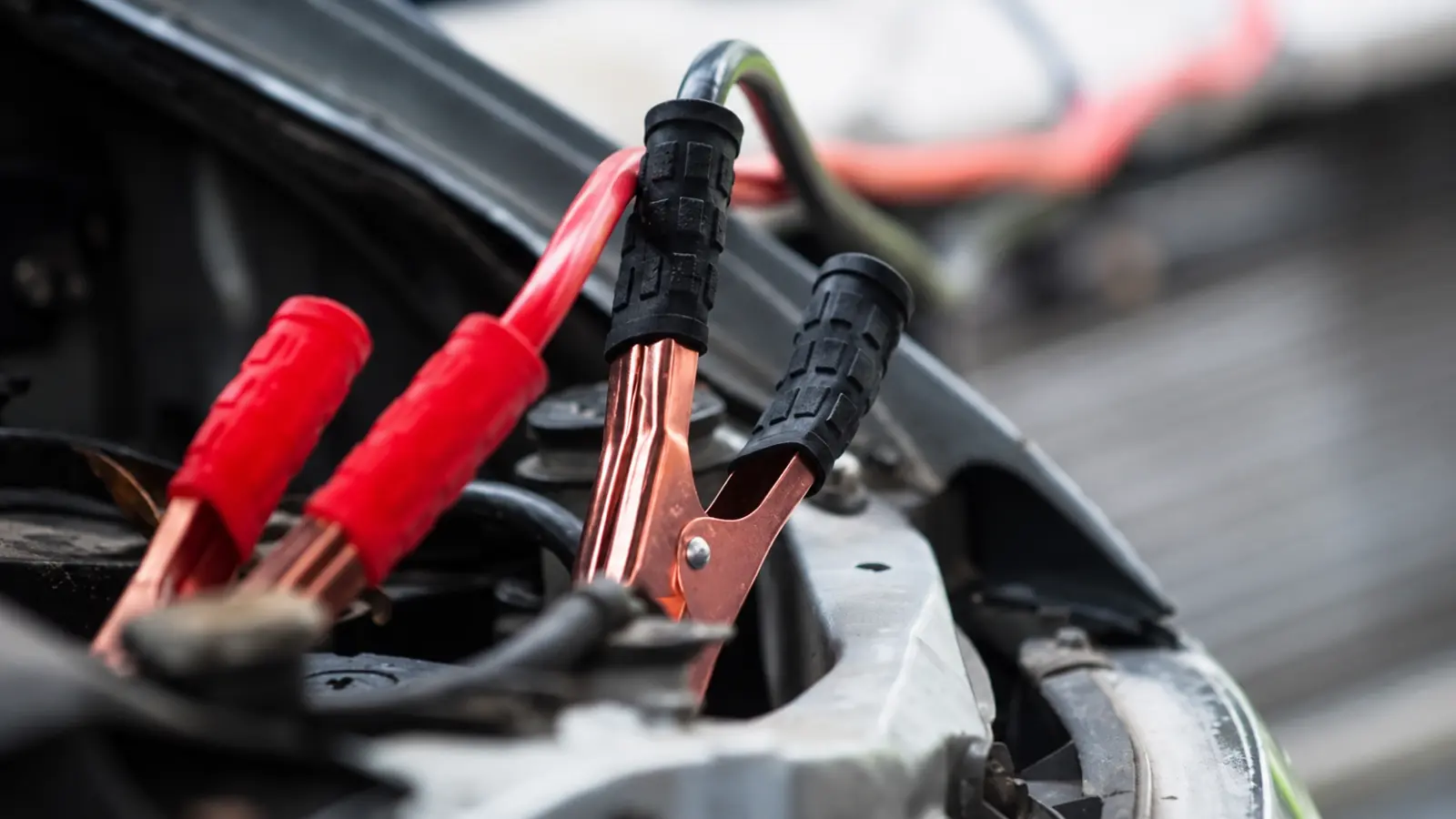
| Safe spot, no damage, no crank or slow crank | Check the owner’s manual, then use a compatible charger, roadside help, or a proper jump-start: How to Jump-Start a Car Safely | Guessing at connection points or cable order |
| Engine cranks normally but will not start | Treat it as a no-start that may involve another system | Repeated boosts, or buying a battery on this symptom alone |
| Started after a boost, and it has happened before | Arrange a battery and charging-system test soon: How to Test a Car Battery | Assuming the boost fixed the cause |
| Will not start even after a correctly attempted boost | Stop repeating attempts and arrange a diagnosis or tow: Car Won’t Jump Start: What to Check Next | Long, repeated cranking that overheats the cables or starter |
A roadside technician can often test the battery on the spot and help you choose between a boost, a replacement, or a tow, which keeps one failed start from becoming a second problem.
What to Note Before You Boost, Charge or Disconnect
Take thirty seconds to record what you saw. That evidence is easy to lose once the engine is running, and it helps the person testing the battery or diagnosing the car.
- Warning lights and messages. A quick phone photo of the dash is enough.
- Sounds. Rapid clicking, a single click, silence, or a normal-speed crank each point in a different direction.
- What changed. A light or accessory left on, a long stretch parked, a cold snap, or a recent short-trip routine can all explain a flat battery.
- History. Whether this has happened before, and roughly how old the battery is.
Also avoid disconnecting the battery to “reset” the car. It can erase stored data and settings, and it does not diagnose anything.
When to Call Roadside Assistance or a Tow
Call for help when the battery shows damage, when you are in an exposed spot, when you do not have the equipment or a safe way to do the work, or when the car still will not start after a proper boost. Roadside help may come through an auto club, your insurer, the manufacturer, or another membership, so check what you already have.
Tell the operator where you are and what you are driving. A tow is the right outcome when the car cannot be started or driven safely, even if the cause seems small. Some vehicles, such as certain all-wheel-drive, hybrid, and electric models, have towing restrictions, so mention the vehicle type and follow the manual.
What to Do After the Car Starts
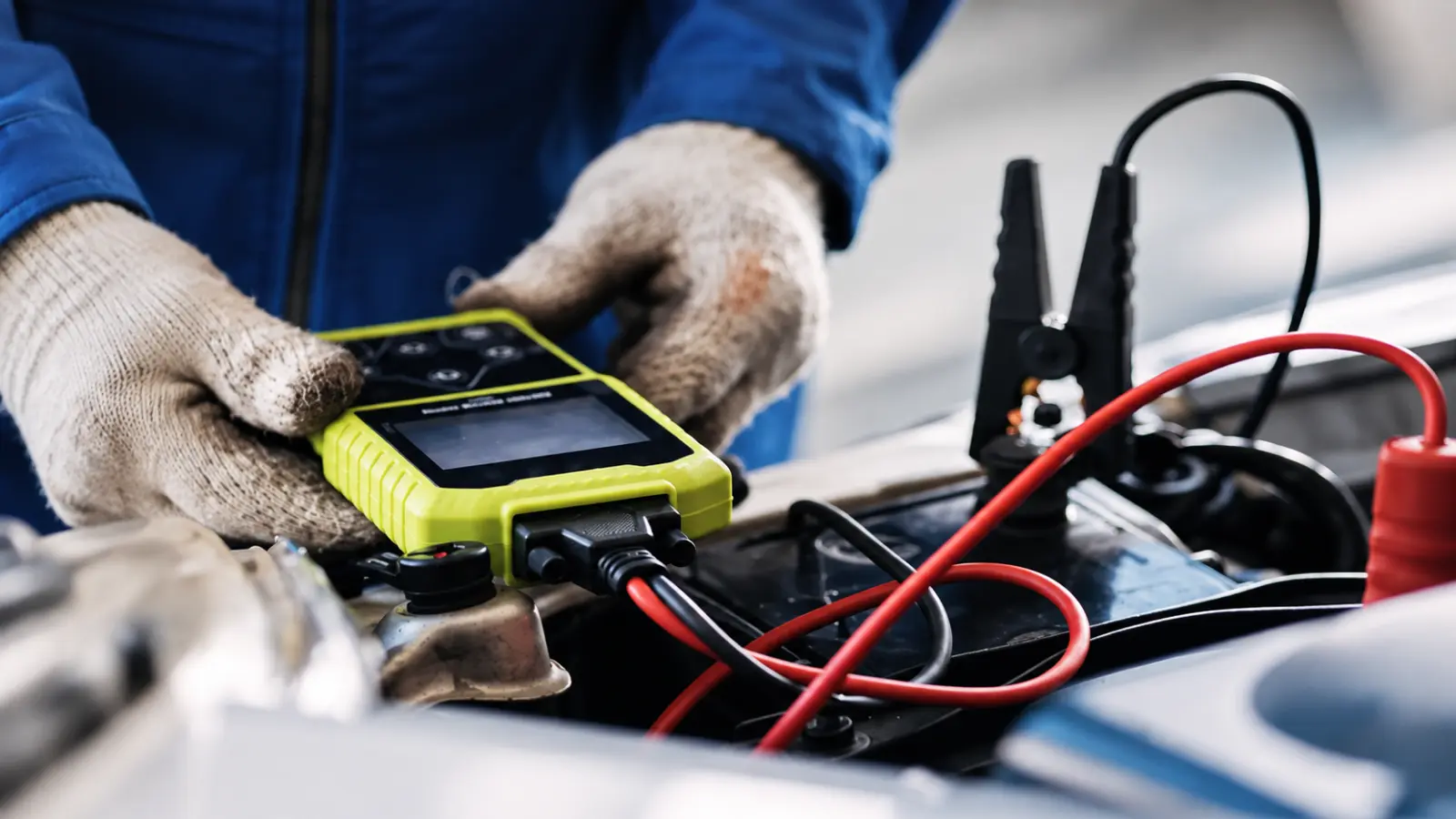
A boost supplies enough power to attempt a start. It does not repair a battery near the end of its life, a charging fault, an electrical draw while parked, or a poor connection, so decide what to do next instead of assuming the problem is over.
If the car runs normally and it is safe to drive, go somewhere it can be tested rather than shutting it off repeatedly for errands. A short drive does not prove the battery has recovered. If the battery or charging light stays on, lights are unusually dim, electrical functions drop out, or you notice an overheating or burning smell, stop treating this as a simple dead battery and arrange professional help. The battery or alternator comparison covers how those two problems differ.
If you have time and a safe place to park, a compatible charger can be a better next tool for an undamaged battery than driving around. Use How to Charge a Car Battery rather than an arbitrary charger or setting.
Have the battery tested soon if the car needed a boost, starts intermittently, cranks slowly, or has gone dead more than once. Do not replace it only because the car failed to start once, but do not keep relying on boosts when the pattern repeats. Why Does My Car Battery Keep Dying? covers recurring-discharge causes, and replacement comes into play only after testing and a check of the vehicle’s requirements, as in How to Replace a Car Battery Safely.
Know What to Do Before Attempting a Jump-Start
A dead car battery doesn’t automatically mean you need a replacement or that a jump-start is the safest solution. Start by making sure your location is safe, checking for visible battery damage, and observing how the vehicle responds when you try to start it. These initial checks can help you determine whether a jump-start, compatible charger, roadside assistance, or professional diagnosis is the most appropriate next step.
If the engine starts after receiving outside power, remember that the underlying problem may still need attention. A weak battery, charging-system fault, or poor electrical connection can cause the same issue to return. Have the battery and charging system checked when appropriate, and use the Car Battery Guide for a broader understanding of battery operation, maintenance, and replacement.
Frequently Asked Questions
What should I do first if my car battery dies?
Move to a safe location, turn on your hazard lights if possible, and check the battery for visible damage. If the battery appears undamaged and the engine cranks slowly or not at all, consider a proper jump-start, compatible charger, or roadside assistance.
How can I tell if my car battery is dead?
Common signs include slow cranking, rapid clicking, dim dashboard lights, or no electrical response when starting. However, loose connections, starter problems, and other electrical faults can cause similar symptoms, so testing is needed to confirm the cause.
Can I jump-start a completely dead car battery?
A deeply discharged but otherwise serviceable battery may respond to a jump-start. However, never attempt to jump-start a battery that is frozen, swollen, cracked, leaking, or unusually hot. Follow your vehicle manufacturer’s instructions and use approved connection points.
How long should I drive after jump-starting my car?
There is no universal driving time that guarantees a full recharge. Short trips may leave the battery partially discharged, especially if it was deeply drained. A compatible battery charger and proper testing are more reliable than driving for an arbitrary number of minutes.
Why won’t my car start even after a jump-start?
Possible causes include poor battery connections, an unsuccessful jump-start, a faulty starter, or another electrical or engine problem. If the engine cranks normally but will not start, the issue may involve fuel, ignition, or engine controls. Avoid repeated attempts and arrange professional diagnosis.
Does a dead car battery always need to be replaced?
No. A healthy battery can become discharged from lights left on, extended parking, or charging-system problems. Recharging may restore normal operation, but repeated discharges or failed battery tests can indicate that replacement is necessary.


