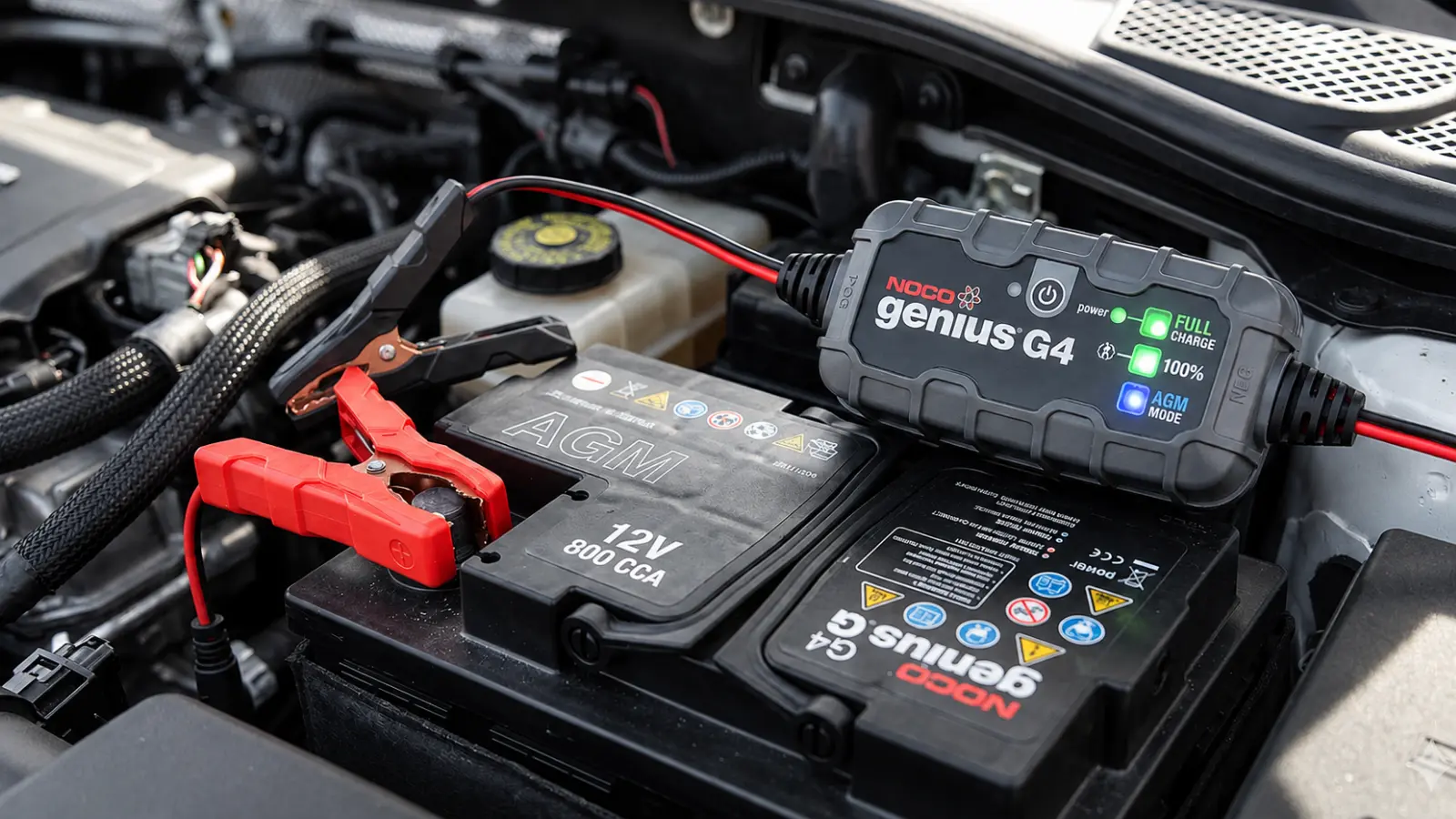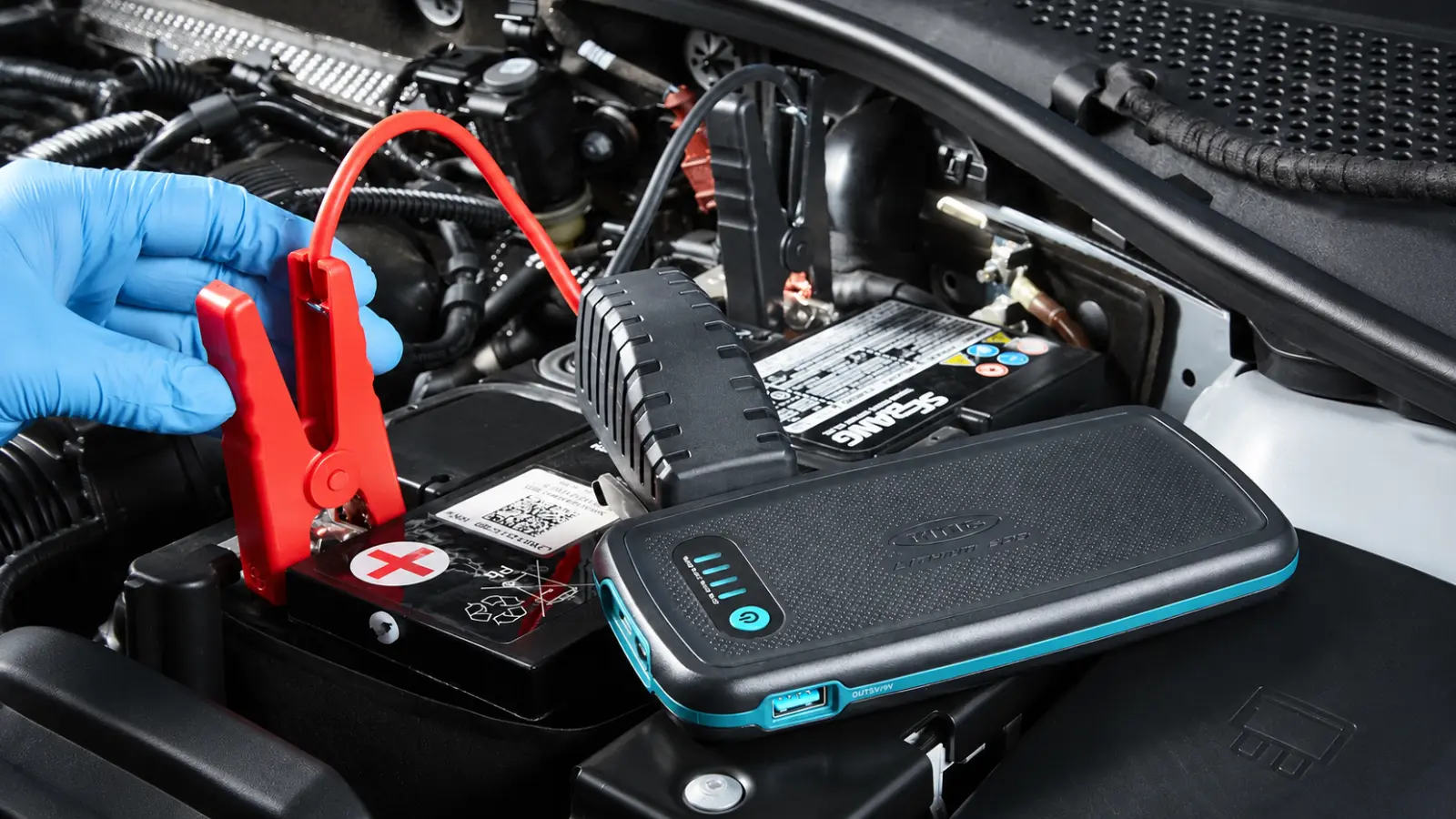


If your car won’t start because the battery is discharged, a jump-start may provide enough power to get the engine running again. Knowing how to jump start a car safely can help you avoid incorrect cable connections, electrical damage, and unnecessary risks. Whether you’re using another vehicle or a portable jump starter, following the correct procedure is essential.
Before connecting anything, check the battery for visible damage and make sure both the vehicle and equipment are compatible with the procedure. Cracked, leaking, swollen, or frozen batteries should never be jump-started. Your owner’s manual should also be your primary reference for approved connection points and vehicle-specific precautions.
This guide explains how to jump-start a car using jumper cables or a portable jump starter, including the correct connection and removal order, important safety precautions, and common mistakes to avoid. You’ll also learn what to do after the engine starts and when a failed attempt requires further diagnosis or roadside assistance.
Check Safety First: When Not to Jump-Start a Car
If the car is stopped in a travel lane or on a narrow shoulder, your safety comes before the battery. Turn on the hazard lights if they work and call roadside assistance or emergency services if there is immediate danger. Depending on traffic conditions and your location, it may be safer to remain inside the vehicle with your seat belt fastened rather than attempt to exit near moving traffic. If you can safely reach a protected area away from traffic, follow local emergency guidance. Never attempt a jump-start beside moving vehicles.
AAA is blunt about the next point: a damaged battery should be replaced, not jumped. Do not connect cables if any of these apply:
- The case is cracked, leaking, bulging, or swollen. A damaged case can release acid and flammable gas once current flows.
- The battery is smoking, very hot, or smells strongly of sulfur. Keep sparks, flames, and metal tools away and call for help.
- It may have frozen in extreme cold. A visibly bulged case or ice is a stop sign.
- The car was recently in a collision. The electrical system may be damaged in ways you cannot see.
- You cannot find the approved jump points. A battery hidden under a seat, in the trunk, or behind a cover usually means the manual has a specific procedure.
Jump-starting is a reasonable owner task on a conventional vehicle when both manuals allow it and the setup is safe. If any of the points above applies, or you are unsure, stop. A tow or a roadside jump is cheaper than a damaged electrical system or an injury.
What You Need Before You Connect Anything
Two minutes of preparation prevents most jump-start problems. Gather the tools, read the relevant manual pages for both vehicles, and note what the dead car was doing before anyone touches a clamp.
- A power source: a donor vehicle with a healthy 12-volt battery, or a portable jump pack with enough charge.
- Jumper cables in good shape: check for cracked insulation, loose clamps, or exposed wire, and make sure they are long enough to reach without stretching.
- Both owner’s manuals: they identify jump terminals, ground points, remote battery locations, and any vehicle-specific warnings.
- Gloves and eye protection: AAA recommends gloves against shock and acid contact.
Both vehicles must use a 12-volt system, which you can confirm on the battery label or in the manual. Position the donor close enough for the cables to reach but not touching, with a few inches of air between the vehicles in case one rolls. Set both parking brakes, put automatics in Park and manuals in neutral unless a manual says otherwise, and turn off the ignition, lights, climate control, and other accessories.
Before connecting anything, take a moment to note what the dead car did: rapid clicking, slow cranking, a dark dashboard, or warning lights. That description helps a technician later and helps you read the result of the jump.
The two common ways to get power compare like this:
| Method | What It Needs | Main Limitation |
|---|---|---|
| Jumper cables | A second vehicle with a healthy 12-volt battery, plus enough cable length to reach | Two vehicles to position and two sets of manuals to check |
| Jump pack | A charged, compatible pack with undamaged leads | A pack that is flat, damaged, or not meant for your vehicle will not help |
If another driver is not available, a jump pack is the more practical choice. Choosing between specific packs is a separate decision from the procedure itself.
How to Jump-Start a Car With Jumper Cables
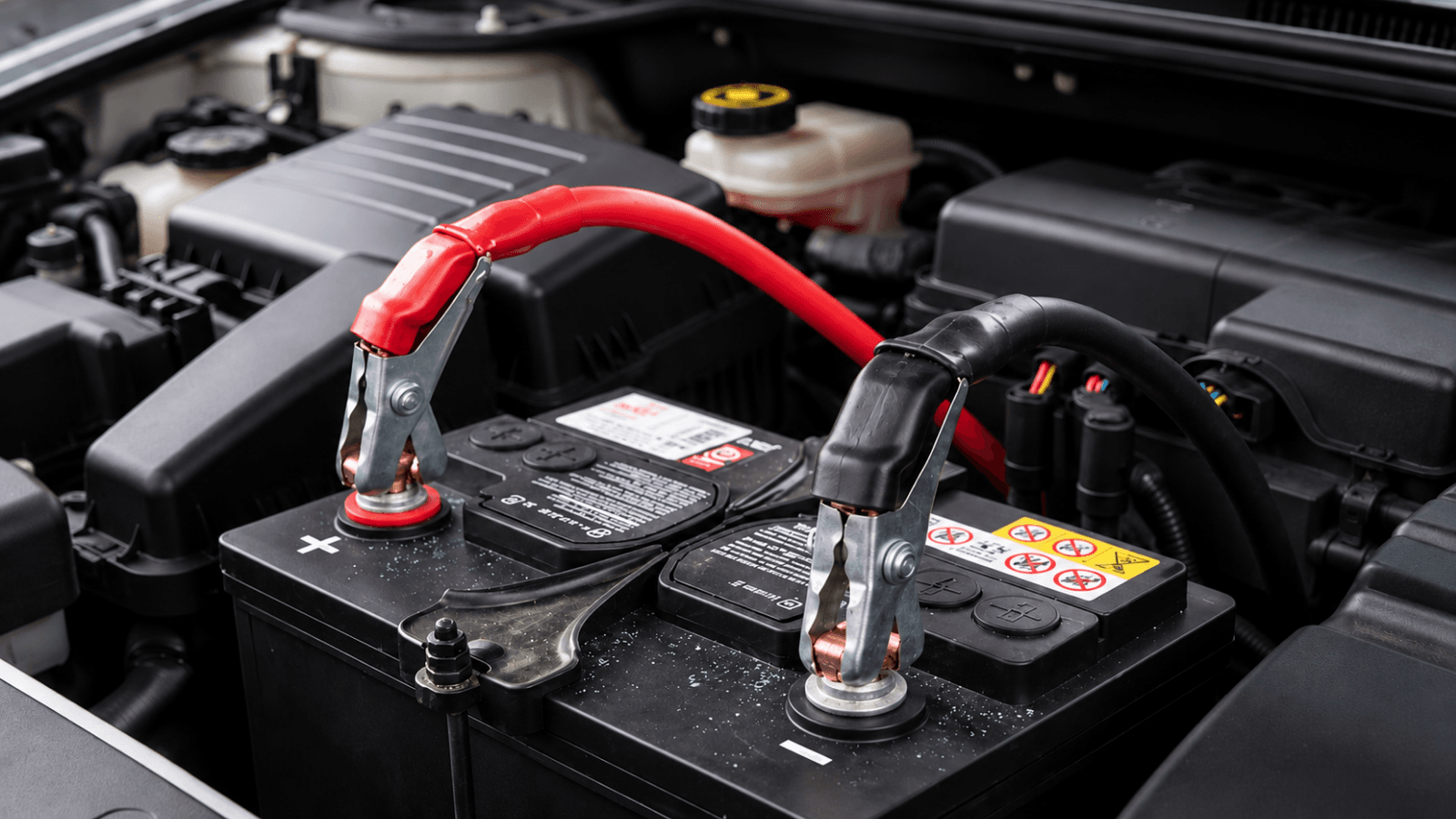
This is the standard sequence for conventional 12-volt vehicles when both manuals allow it. The order matters: the final connection can throw a small spark, so it goes on bare metal away from the battery instead of on the battery itself. Keep the free clamps apart and off metal the whole time.
- Red clamp to the dead car’s positive (+) terminal. Use the battery’s positive post or the positive jump terminal the manual identifies. Rely on the “+” marking and the manual, not on the color of a cover alone.
- Other red clamp to the donor’s positive (+) terminal. Once one red clamp is attached, make sure the other end never touches the black clamps or any metal.
- Black clamp to the donor’s negative (−) terminal. Confirm the clamp is seated and clear of belts, fans, and hot parts.
- Last black clamp to bare metal on the dead car, away from the battery. Use the ground point the manual specifies, or a solid unpainted metal point such as an engine bolt or bracket. Keep it clear of fuel lines, belts, pulleys, and fans. Do not put it on the dead battery’s negative post, because that places the spark right next to the hydrogen gas a battery can vent.
- Start the donor and let it run for a few minutes. This lets some charge flow into the dead battery. Some manuals give their own instructions for the donor engine, so follow them if they differ.
- Try to start the dead car. Make short attempts and pause between them. Long cranking can overheat the starter and cables. Do not rev either engine unless a manual tells you to.
- Once it is running, remove the clamps in exact reverse: black from the dead car’s ground point, black from the donor’s negative, red from the donor’s positive, then red from the revived car’s positive. Do not let the clamps touch each other or metal as you go.
Removing the ground clamp first means any spark happens at that point, away from the battery, and it keeps live clamps from swinging into metal. Refit any terminal covers or panels you opened.
Common Mistakes That Cause Sparks, Damage, or a Failed Start
Most failed jumps trace back to a handful of avoidable errors. These are the ones worth checking against before you try again.
- Final clamp on the dead battery’s negative post. It works electrically, which is why people do it, but it puts the last spark beside battery gas. AAA specifically warns against it.
- Reversed polarity. Connecting positive to negative can burn out electronics, blow fuses, or overheat cables. If you see smoke, melting insulation, or a burning smell, step away and call for help.
- Letting live clamps touch. Once one end is connected, the free clamp on the same cable is live. Keep it away from the other clamps and from metal.
- Long crank attempts. If the car does not start after a couple of short tries, repeating long cranks only heats cables and the starter.
- Using a hybrid or EV as the donor. Do not, unless that vehicle’s manual explicitly allows it.
None of these require special skill to avoid. They just require slowing down at the clamp, which is where the risk concentrates.
How to Jump-Start a Car With a Jump Pack
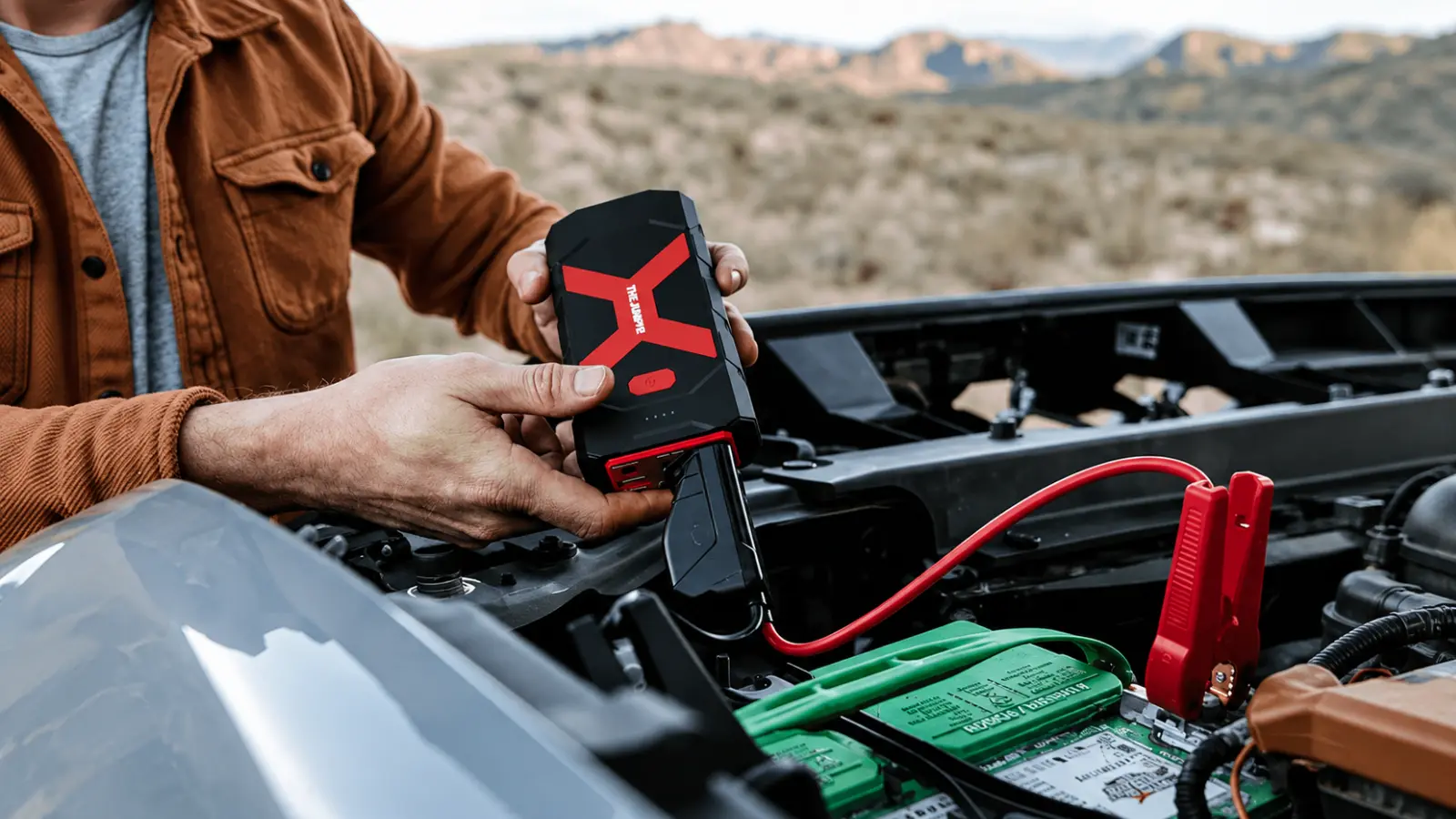
A jump pack removes the donor car, but not the safety checks. Pack designs differ in their switches, safeguards, and lead order, so the pack’s instructions control the details and the vehicle manual still controls the connection points.
- Check the pack. Confirm it is charged, rated for a 12-volt vehicle like yours, and has undamaged leads. Keep it off until the leads are connected, unless its instructions say otherwise.
- Connect the positive lead to the vehicle’s positive battery terminal or designated positive jump terminal.
- Connect the negative lead to the ground point your manual or the pack instructions specify, typically bare metal away from the battery.
- Turn the pack on and start the car with short attempts, as with cables.
- When the engine runs, switch the pack off and disconnect the leads in the order the pack instructions give. Recharge the pack afterward so it is ready next time.
A pack is an emergency starting tool. It will not rescue a damaged battery, and it does not replace charging, testing, or replacement.
Jump-Starting a Hybrid, EV, or Start-Stop Vehicle
You can often jump the 12-volt battery in a hybrid or EV, but only through the points its manual identifies. AAA warns that the complex electronics in most hybrids and EVs can be damaged by jump-starting another car. Never connect to the high-voltage traction battery or its orange cabling. That is specialist territory.
Several things change on these vehicles:
- Jump terminals may be remote. Many have a dedicated positive terminal under a cover in the engine bay or trunk, and a marked ground point. Do not guess.
- The 12-volt battery may live elsewhere. If you cannot find it, read the manual before opening anything.
- Do not use them as donors unless the manual explicitly says it is allowed.
- Start-stop and other non-standard 12-volt systems can carry specific instructions. Check the manual before connecting.
If the manual is missing or unclear, roadside assistance is the safer call than improvising on a vehicle you cannot read.
After the Engine Starts: Remove the Cables and Plan the Next Step
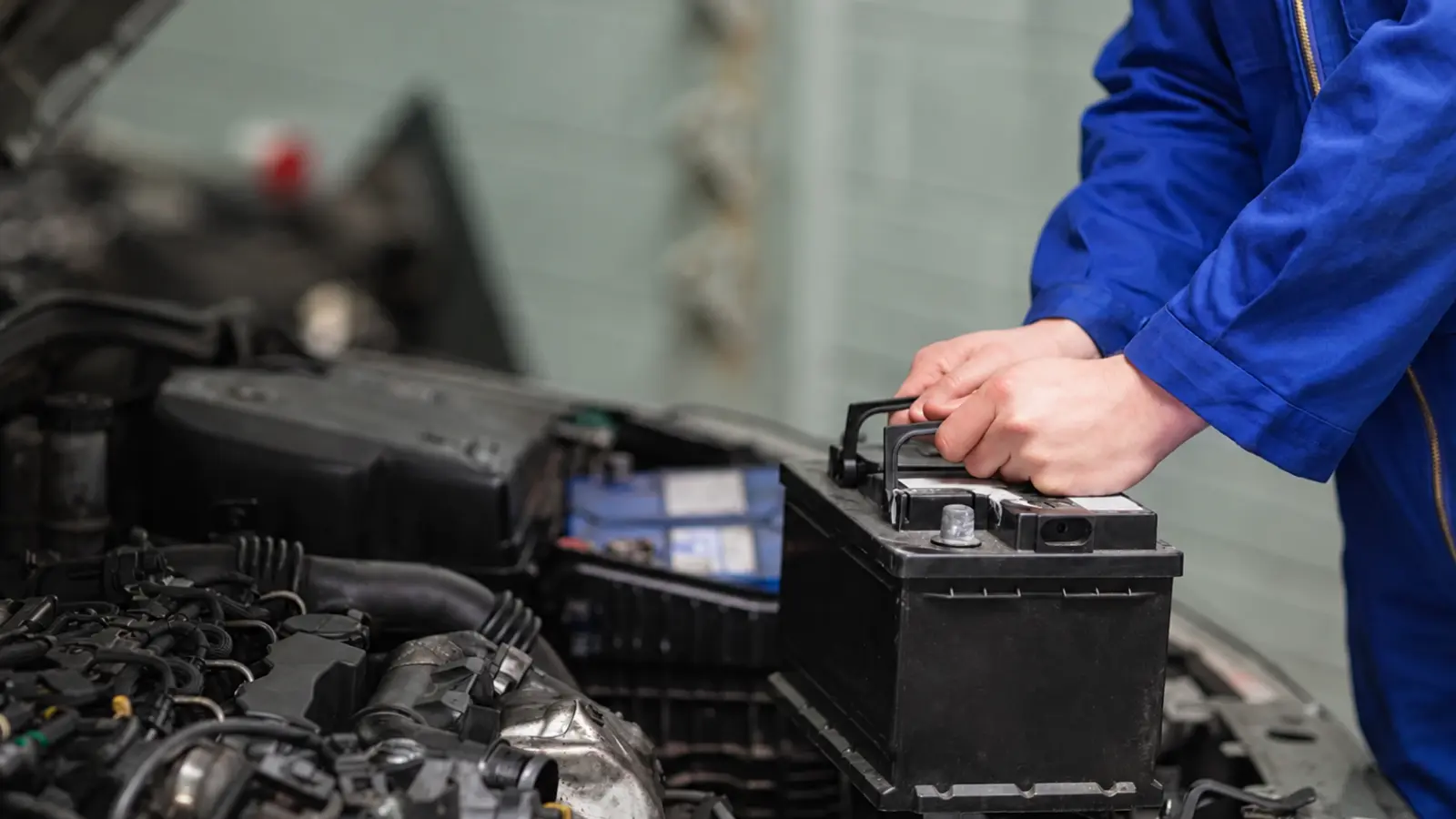
A running engine proves only that outside power got it started. It does not show that the battery will hold a charge, that the charging system works, or that whatever drained it is gone. AAA puts it plainly: a jump-start often does not equal a charged battery.
Once the clamps are off, avoid shutting the engine down right away, because the battery may not be able to start it again. Drive to a place where the battery can be tested. AAA notes that a continuous drive of 20 to 30 minutes is usually enough to restore some charge, but that is a rule of thumb, not a guarantee, and it cannot revive a battery that is too worn to hold one.
Stop and get help instead of continuing if:
- a battery or charging warning light stays on after the jump;
- headlights are unusually dim or electrical features drop out;
- you notice a burning smell or signs of overheating.
Do not clear warning lights or disconnect the battery to “reset” the car right after a jump. Doing so can erase information a technician needs, and a reset is not a diagnosis. Clocks and radio presets may reset on their own, and that is not a cause for alarm.
Next step: test the battery before buying one. If the car needed a jump once after you left the lights on, the cause may be obvious. If it happens again, see why a car battery keeps dying. If testing shows the battery is simply depleted and healthy, charging it properly is better than relying on a drive. If it fails, replace it using the specification for your vehicle.
If the Car Still Won’t Start
If a correctly prepared attempt fails, stop rather than cranking repeatedly. Recheck that every clamp is seated on bare metal or the approved terminal, and that the ground clamp has not slipped. Heavy corrosion under a clamp can also block current, so the clamp needs to bite clean metal.
If the car still does not start, the battery may be too discharged or too old to accept a boost, or the problem may lie elsewhere, such as the starter or its connections. A single failed jump does not prove which. Arrange a battery test, roadside help, or a tow depending on where you are. Car Won’t Jump Start: What to Check Next covers the next checks, and Dead Car Battery: What to Do First covers the decision before any attempt. For how the battery fits into the rest of the starting system, see the car battery guide.
Jump-Start Safely and Check the Battery Afterwards
Jump-starting a car can be straightforward when you follow the correct procedure, but safety always comes first. Check the battery and surrounding area before connecting anything, use the approved connection points, and follow the proper cable order. Whether you’re using jumper cables or a portable jump starter, never attempt the procedure on a damaged or frozen battery, and always follow your vehicle’s owner’s manual.
Once the engine starts, remember that a successful jump-start doesn’t mean the battery is fully charged or that the underlying problem has been resolved. Have the battery and charging system checked when appropriate, especially if the vehicle has needed multiple jump-starts. Identifying the cause can help prevent another unexpected breakdown and determine whether charging, repair, or battery replacement is necessary.
Before you begin.
What is the correct order to connect jumper cables?
Connect the red clamp to the dead battery’s positive (+) terminal, then the other red clamp to the donor battery’s positive (+) terminal. Connect the black clamp to the donor’s negative (−) terminal and the final black clamp to the approved ground point on the disabled vehicle, away from its battery. Always follow vehicle-specific instructions.
How long should I wait before starting a car with jumper cables?
For a conventional 12-volt jump-start, letting the donor vehicle run for a few minutes is commonly recommended. A deeply discharged battery may require more time. Follow both vehicles’ manuals, make short starting attempts, and avoid repeated cranking if the engine does not start.
What happens if you connect jumper cables incorrectly?
Reversing positive and negative connections can damage vehicle electronics, blow fuses, or overheat the cables. If you notice smoke, melting insulation, or a burning smell, stop immediately, keep clear of the battery area, and seek professional assistance.
Can you jump-start a car with a portable jump starter?
Yes. A compatible, sufficiently charged portable jump starter can start a vehicle without another car. Connect it using the approved positive terminal and ground point, following both the jump starter’s instructions and the vehicle owner’s manual.
How long should you drive after jump-starting a car?
A continuous drive of 20–30 minutes may restore some battery charge, but it does not guarantee a full recharge. A deeply discharged battery may need a compatible charger, and repeated starting problems require battery and charging-system testing.
Can you jump-start a hybrid or electric car?
Many hybrids and electric vehicles allow their 12-volt systems to be jump-started using designated connection points. However, procedures vary by model, and high-voltage components must never be used. Always consult the owner’s manual, and do not use a hybrid or EV as a donor unless explicitly permitted.