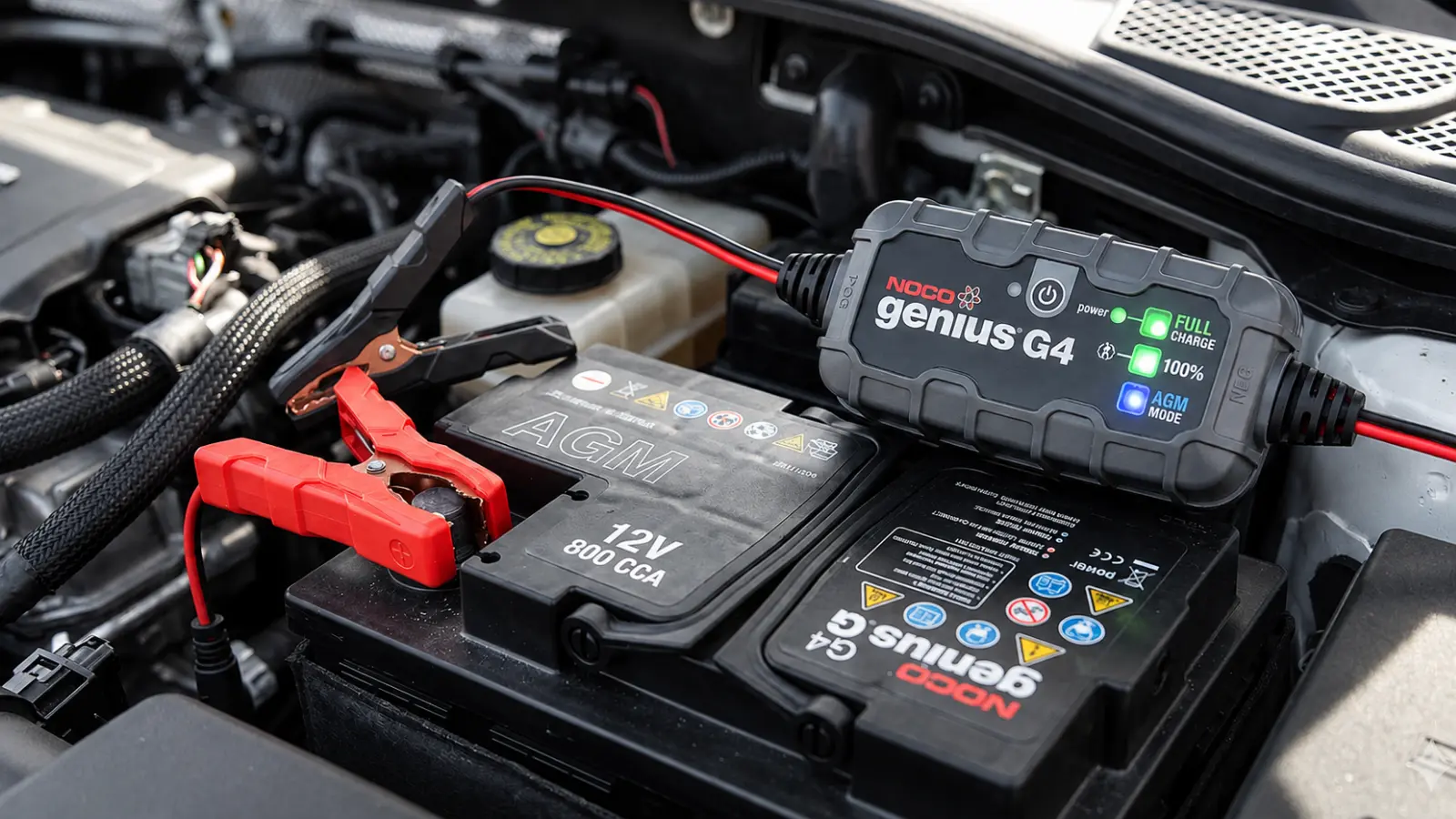


If your car battery keeps dying, replacing it may not solve the problem. A worn battery can lose its ability to hold a charge, but repeated discharge can also come from short trips, electrical accessories drawing power while the car is parked, poor connections, or a charging system that isn’t working properly. Even a brand-new battery can go dead if the underlying cause remains.
When the battery dies is one of the most useful clues. A car that won’t start after sitting overnight may have an excessive electrical draw or a weak battery, while repeated problems after short drives can suggest insufficient charging. If the battery goes flat while driving or shortly after a jump-start, the charging system deserves closer attention. These patterns help narrow the possibilities, but none confirms a diagnosis on its own.
This guide explains the common reasons a car battery keeps going dead, how to recognize patterns such as overnight battery drain, and what to check before replacing parts. You’ll also learn why a jump-start isn’t a complete fix, when professional electrical testing is necessary, and how to avoid replacing a battery when the real problem is elsewhere.
The Usual Causes of a Battery That Keeps Dying
Repeated discharge rarely has a single villain. These are the causes worth separating, because each one leaves a different trail.
- A worn or repeatedly over-discharged battery. Most starting batteries last about three to five years, closer to three in hot climates, according to AAA, with heat and vibration doing much of the damage. Running a battery low is itself harmful (battery makers point to sulfation), so a battery that has gone flat several times may not recover even after the underlying problem is fixed.
- Short trips and low use. Starting the engine takes a lot of energy, and a brief drive with the heater, defroster, or other accessories running may not put it all back. Cold weather exposes the shortfall sooner because a cold battery delivers less.
- A parked load that is too high. A small standby draw is normal. Trouble starts with a light left on, a charger in an outlet that stays live, aftermarket gear such as a dash camera, alarm, or amplifier, or a module that never goes to sleep.
- A charging system that isn’t keeping up. A worn alternator, a slipping or damaged drive belt, or damaged charging wiring can leave the battery undercharged. A battery warning light, dimming lights, or stalling are the usual clues, but none of them proves which part is at fault.
- Poor connections. Corroded or loose terminals, a damaged cable, or a weak ground restrict current both ways, so they can imitate a weak battery or a weak alternator.
- Long storage. A car that sits for weeks keeps feeding its standby systems, and a battery that was already weak or partly discharged loses ground faster.
Many repeat failures involve two of these at once. An aging battery makes an ordinary standby load or a run of short trips suddenly matter, which is why a single test result rarely settles the question.
Match Your Pattern to the Likely Cause
Timing is the most useful clue you already have. The table pairs each pattern with the evidence worth gathering and a sensible next step. None of the rows is a diagnosis.
| When It Dies | What It Often Points To | Evidence to Gather | Next Step |
|---|---|---|---|
| After one night, or a familiar parked interval | A parked load, a light or accessory left on, a weak battery, or a connection problem | Interior, trunk, and glove-box lights; chargers or gear plugged in; new equipment; doors and hatch fully latched | Recharge, then test the battery. If it passes and the pattern repeats, arrange draw diagnosis. |
| After several short trips | Undercharging, reduced battery capacity, connections, or the charging system | Trip length; heavy accessory use; slow-crank history; warning lights | Recharge fully and test. Check charging if dimming or warnings are present. |
| After days or weeks of sitting | Standby loads, storage conditions, a low starting charge, or reduced battery health | How long it sat; temperature extremes; how the car started before parking | Recharge with a proper charger, then test. Follow the owner’s manual on storage. |
| Soon after a jump-start, or while driving | The charging system, cable or terminal problems, or a battery that can’t recover | Battery light, dimming, stalling, drive belt condition (engine off), jump-start history | Have the charging system and battery tested. A successful jump doesn’t prove the battery was the only issue. |
| A brand-new battery keeps dying | A cause the new battery never solved, or a battery that was low or the wrong type for the vehicle | Install date; whether the type matches the original; whether the car needed registration after the swap | Go back to the installer or a shop to test the battery and the charging system. |
| Intermittently, with no clear schedule | An intermittent connection, module behavior, or several overlapping causes | Dates, weather, recent repairs, accessories, and any test records | Bring your log to a qualified shop for vehicle-specific electrical diagnosis. |
Rows can overlap. If your car fits two of them, start with the visual check and a proper battery test before moving to anything that means digging into the electrical system.
Battery Condition: Why Age Alone Does Not Settle It
A car battery not holding charge can mean two different things. It may simply not be fully charged right now (its state of charge), or it may no longer store and deliver energy the way it should (its state of health). VARTA notes that a voltage reading reflects state of charge, while judging health takes a more involved test, especially for start-stop batteries.
Test conditions change what a number means. A battery that was just driven or charged can read better than it really is, so let it rest before checking voltage. On a conventional lead-acid battery, about 12.6 volts at rest is commonly associated with a full charge, and VARTA advises recharging when the reading falls below about 12.4 volts. Temperature, battery type, and recent charging all shift the reading, and a low number only says the battery is discharged, not why.
Use a tester set for the battery technology your vehicle specifies, and treat the result as one piece of evidence. Our car battery testing guide covers what each method can and can’t establish. If testing says the battery is done, match the type to the vehicle: AAA recommends the same type as the original because charging systems are tuned to it, and our guide to choosing the right car battery covers fitment.
Short Trips, Accessories, and Why a Jump-Start Doesn’t Recharge
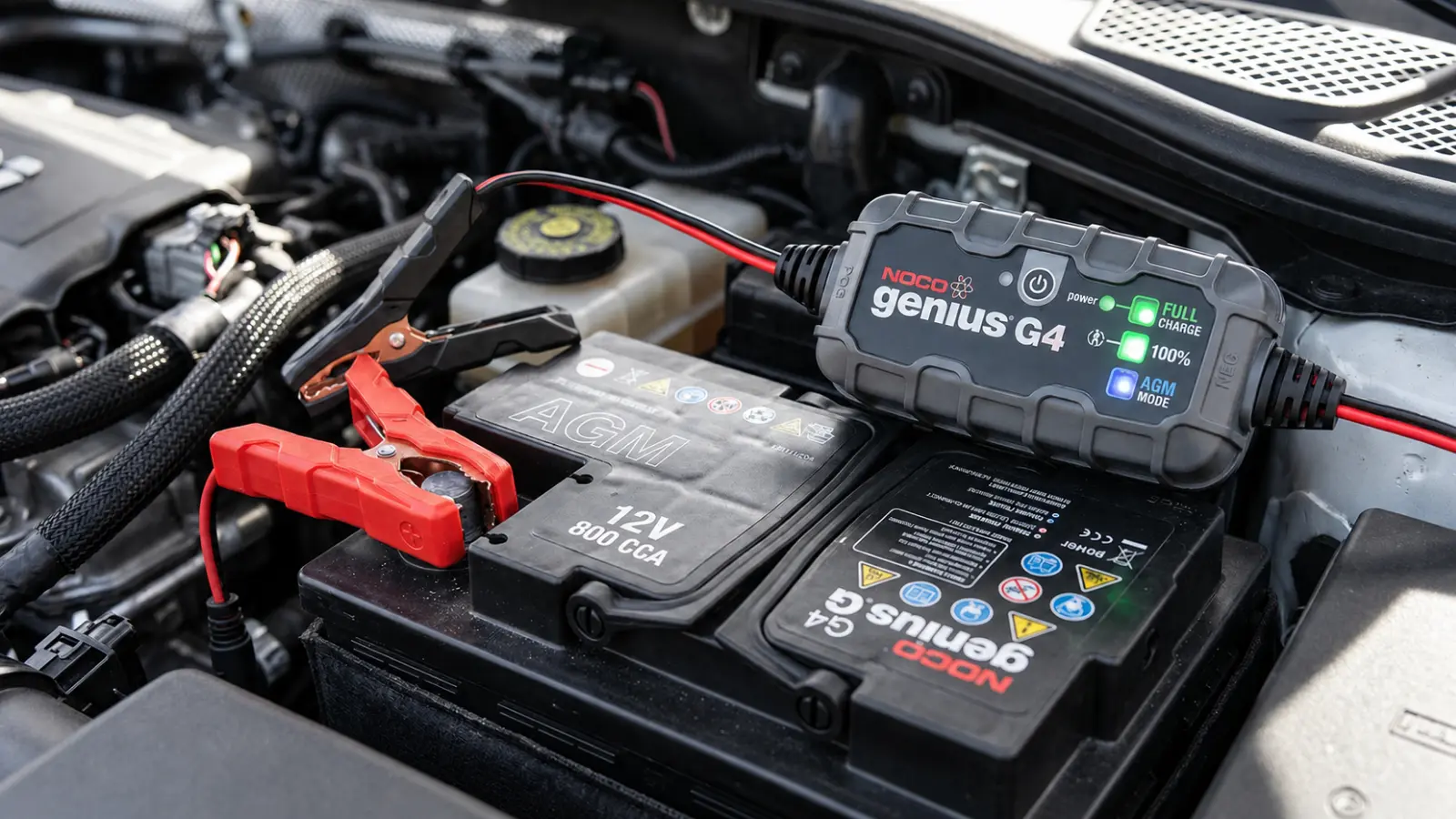
Starting an engine uses energy, and the car then needs enough running time, under its own electrical load, to put it back. There’s no universal drive time that proves a battery has recovered. Trip length, heater and defroster use, cold weather, and a battery with reduced capacity all make the balance less forgiving.
That also explains why a quick drive after a jump-start often isn’t enough. Alternators are generally designed to keep a healthy, mostly charged battery topped up, not to rebuild one that was deeply discharged, and battery makers commonly warn that leaning on the alternator this way can set up a cycle of dead batteries and jump-starts. A battery charger is the more complete way to recharge, provided the battery isn’t damaged. Our guide to charging a car battery safely covers the procedure.
Look at real use rather than guessing. Are most trips brief? Was a dash camera, amplifier, trailer connection, or other equipment added? Does the problem follow a stretch of little driving? None of this identifies a fault, but it separates ordinary use patterns from an abnormal parked load. For a car that sits, the owner’s manual is the place to check storage guidance, including whether a compatible maintainer is appropriate.
A Parasitic Draw Is a Hypothesis, Not a Guess

Modern vehicles keep some modules powered after the key is off, so a small parked draw is normal. A parasitic draw becomes a problem when a circuit, accessory, or module keeps pulling more than it should, or stops the vehicle from reaching its normal sleep state. That makes it a category to investigate, not a conclusion you can draw from a dead battery.
A figure often quoted is about 50 milliamps once everything has gone to sleep, but treat it as a rule of thumb, not a specification. ALLDATA notes that sleep time varies by manufacturer and module, anywhere from roughly 30 to 120 minutes, so a reading taken too early can make a normal car look faulty. Measuring it also means working in the battery circuit with a meter, and a mistake can damage the meter or spoil the reading.
Some checks cost nothing and come first:
- Lights: a glove-box, trunk, or dome lamp that stays on after you close up.
- Plugged-in gear: chargers or devices in an outlet that stays powered with the car off.
- Add-ons: a dash camera, alarm, amplifier, or other equipment installed recently, especially if the problem began afterward.
- Latches: a door, hood, or hatch that doesn’t fully latch and keeps lights or modules awake.
Avoid pulling fuses at random or unplugging components to see what changes. Procedures vary by vehicle, and that approach can wake modules and muddy the evidence. If the battery tests well after a full recharge and the car still goes flat while parked, the next step is targeted electrical diagnostics. It’s also fair to ask the shop whether the manufacturer has published service information or software updates for parked battery drain on your model. A year, make, and model match doesn’t settle that; the VIN and the manufacturer’s documents do.
Connections and the Charging System Can Mimic a Bad Battery
Terminal corrosion, a loose terminal, a damaged cable, or a poor ground can limit the current needed to start the car, so the symptom looks like a weak battery even when the battery isn’t the only problem. With the engine off and cool, look for corrosion, damaged insulation, terminals that move, or a battery that isn’t held down firmly. Don’t force a connection, and don’t work around a swollen, leaking, smoking, or hot battery.
The charging system belongs in the investigation when the battery keeps going low after the engine has been running, especially with a battery warning light, dimming lights, or a stall. A voltage reading with the engine running can be a clue, but output varies by vehicle because some use smart or variable charging, so one number can’t pass or fail a charging system. Even then, the pattern doesn’t prove an alternator failure, since battery condition, cables, and connections all influence one another. Our guide to bad battery or bad alternator shows how the symptoms differ and which tests separate them.
Hybrids, EVs, and Start-Stop Cars
The 12-volt battery in a hybrid or EV can go flat on its own and leave the car unresponsive even when the high-voltage battery is fine, so a dead 12-volt isn’t a traction-battery verdict. Use the owner’s manual to find the designated jump or charge points, and leave orange high-voltage cabling and components to qualified technicians. Cars with start-stop usually require a specific battery type (AGM or EFB), and some vehicles need a replacement battery registered or coded, so confirm both before buying.
A Sensible Test Order
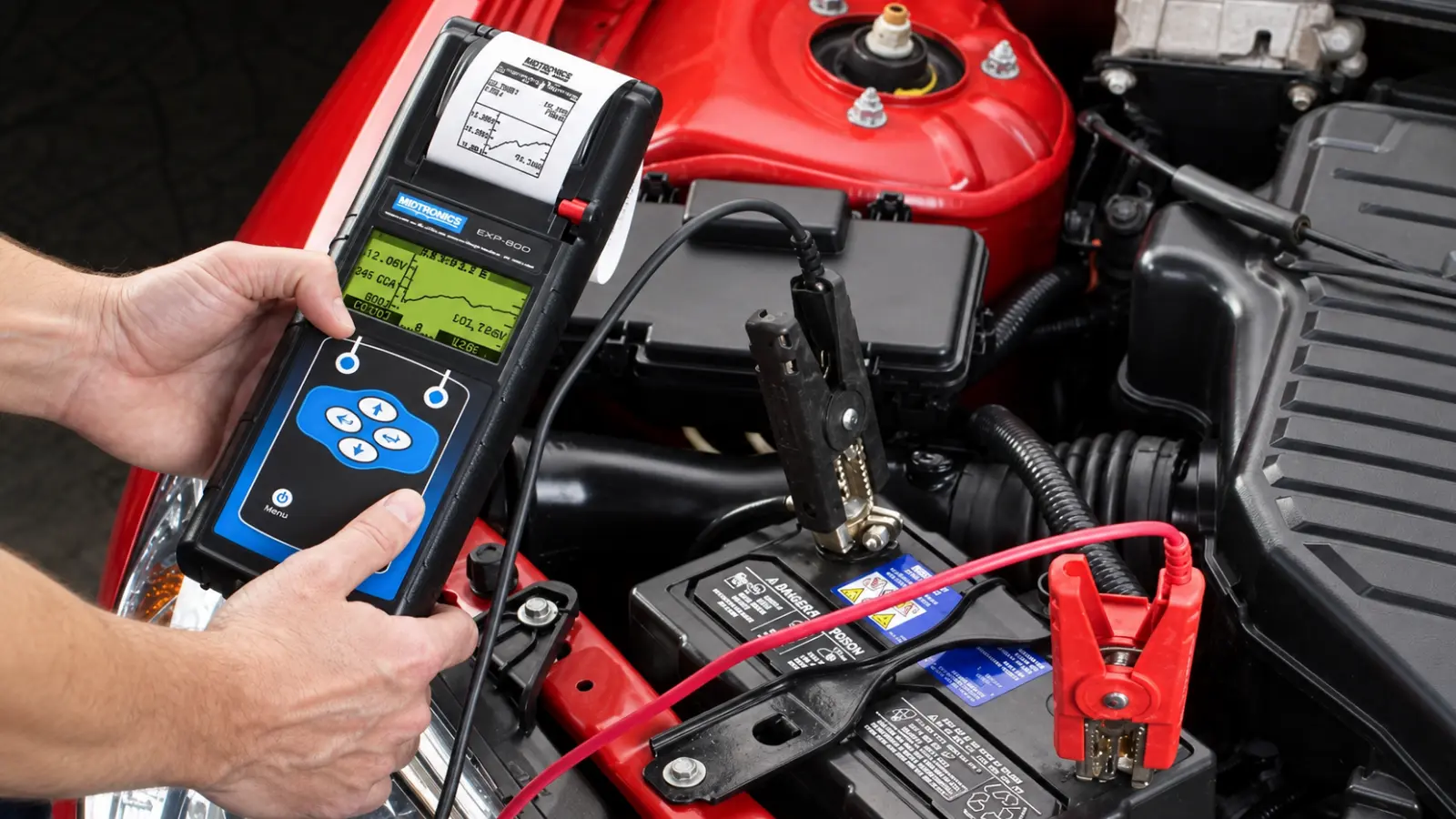
Each result should lead to the next check, so a low reading doesn’t turn into a premature purchase.
- Make it safe, then look. Batteries contain corrosive acid and can release flammable gas, so keep flames and sparks away, wear eye protection, and don’t lay metal tools across the terminals. Stop if the case is swollen, cracked, leaking, hot, or smoking. Otherwise, with the engine off, check the terminals, cables, and hold-down.
- Write down the pattern. Record when it happened, how long the car sat, what the engine did, any warning lights, and recent accessory or repair changes.
- Recharge, let it rest, and test the battery. A proper test after recharge separates a low state of charge from reduced health far better than one voltage reading. If the battery fails, replace it with the correct type. If it passes, keep going.
- Test the charging system when the pattern points to it. Repeated low charge after driving, a warning light, dimming, or stalling justify a charging-system test, not a battery-only conclusion.
- Escalate a parked discharge that survives steps 1 to 4. A battery that tests well yet goes flat while parked needs targeted electrical diagnosis.
Replacement is the right call when testing shows the battery can’t hold a charge or it’s physically damaged. It’s the wrong first move when the evidence points elsewhere, because a new battery will simply go flat again.
On cost, a battery test is often inexpensive or free at retailers and shops, though availability varies. A battery, an alternator, and a draw diagnosis sit at very different price points, and diagnosis is billed mostly as labor time, which depends on how long the fault takes to find. Vehicle, battery type, access, and any required registration or coding move the total, as our car battery replacement cost guide explains. If the car won’t accept a jump or still won’t start, see what to check when a car won’t jump-start.
When to Stop and Get Help
Do not jump-start or charge a battery that is visibly damaged, leaking, swollen, frozen, smoking, or unusually hot. Keep ignition sources away and arrange professional help. If you’re stopped in an unsafe spot, get yourself to safety and call roadside assistance instead of troubleshooting beside traffic.
If the car loses power or stalls while driving, treat it as urgent: it may be running on battery reserve alone, so move to a safe place and call for help rather than restarting in traffic. Get a prompt inspection if a warning light stays on, if the same discharge returns after a valid battery test, or if terminals and cables look damaged. When a jump-start is safe and your manual allows it, our jump-start guide covers the steps; follow it with testing rather than treating the jump as the repair.
How to Stop Your Car Battery From Dying Repeatedly
When a car battery keeps dying, the first step is to identify when the problem occurs rather than assume the battery itself has failed. Check for obvious electrical loads, damaged or loose connections, and changes in driving habits or accessories. Then recharge the battery safely and have its condition tested. A battery that passes after a full recharge may still be losing power because of short trips, an abnormal parked draw, or a charging-system problem.
If the battery repeatedly goes flat after sitting, professional parasitic-draw testing may be needed. If the problem occurs after driving or comes with charging warnings, the charging system should be checked. Replace the battery when its condition warrants it, but make sure the underlying cause has been addressed. That is the best way to avoid repeated jump-starts, unnecessary replacements, and another unexpected no-start.
Frequently Asked Questions
Why does my car battery keep dying overnight?
Common causes include lights or accessories left on, excessive parasitic draw, or an aging battery that cannot hold enough charge. Recharge and test the battery first. If it passes but continues dying overnight, have the vehicle checked for abnormal electrical drain.
Why does my car battery keep dying even after I replace it?
A new battery will not fix an underlying charging problem, parasitic draw, or poor electrical connection. An incorrect battery type or missing battery registration can also contribute on some vehicles. Have the battery, charging system, and installation checked.
Can short trips cause my car battery to keep dying?
Yes. Frequent short trips may not give the charging system enough time to replace the energy used during starting, especially with heavy accessory use. A compatible battery charger can restore a low battery more reliably than relying on short drives.
How do I know if my car has a parasitic battery drain?
A battery that repeatedly dies while parked despite passing a proper battery test may indicate excessive parasitic draw. Check for lights left on, plugged-in accessories, and recently installed electronics. A professional draw test can confirm whether the vehicle uses too much power after its systems enter sleep mode.
Can a bad alternator cause my battery to keep dying?
Yes. A faulty alternator, damaged drive belt, or charging-system wiring problem can prevent the battery from recharging properly. Warning lights, dimming headlights, or stalling while driving are possible clues, but a charging-system test is needed to identify the cause.
Does a car battery that keeps dying need to be replaced?
Not always. A healthy battery may repeatedly discharge because of short trips, excessive parked electrical loads, or charging problems. Replace it if a proper test after recharging confirms poor battery health, or if the battery is physically damaged.