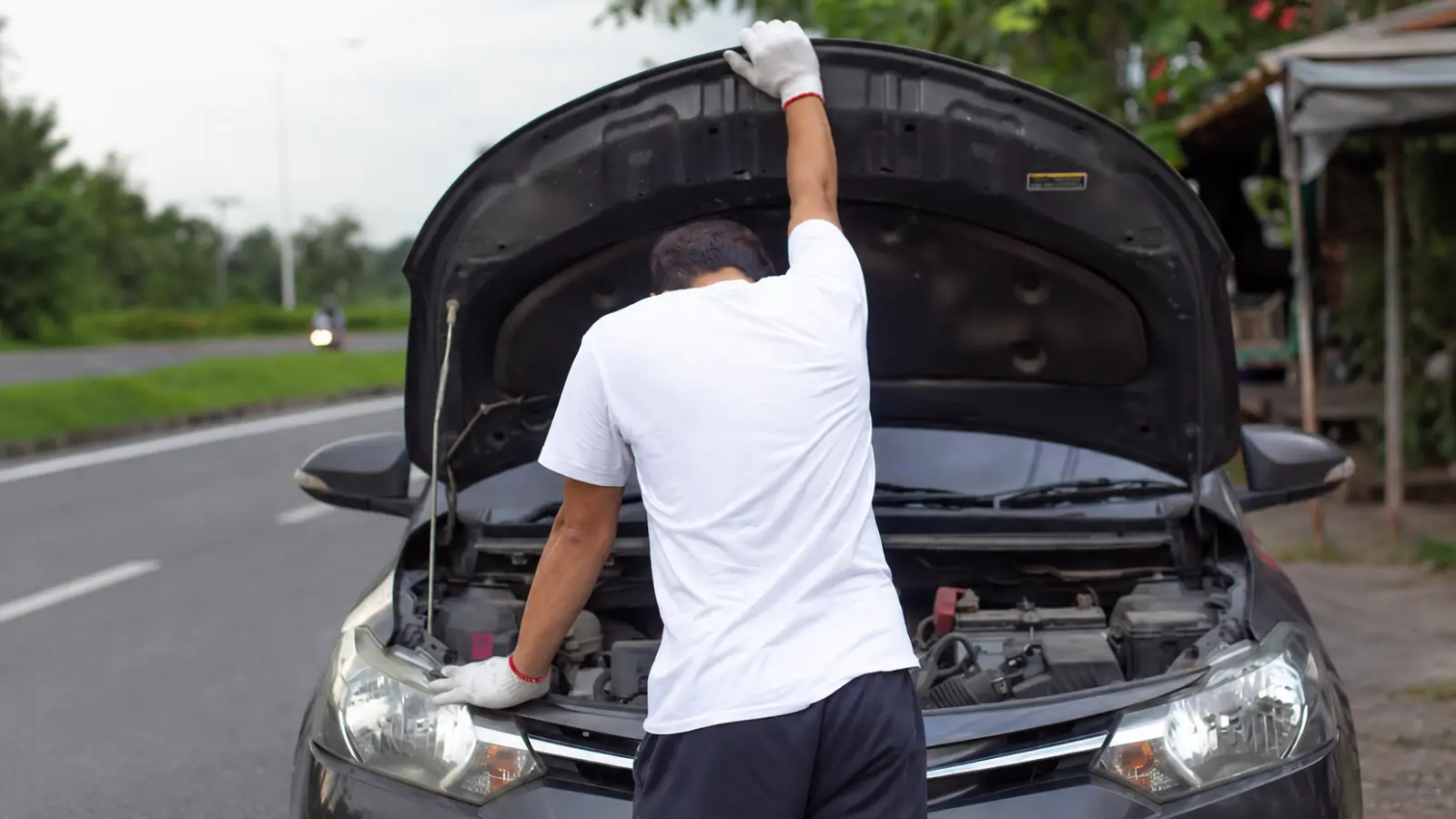

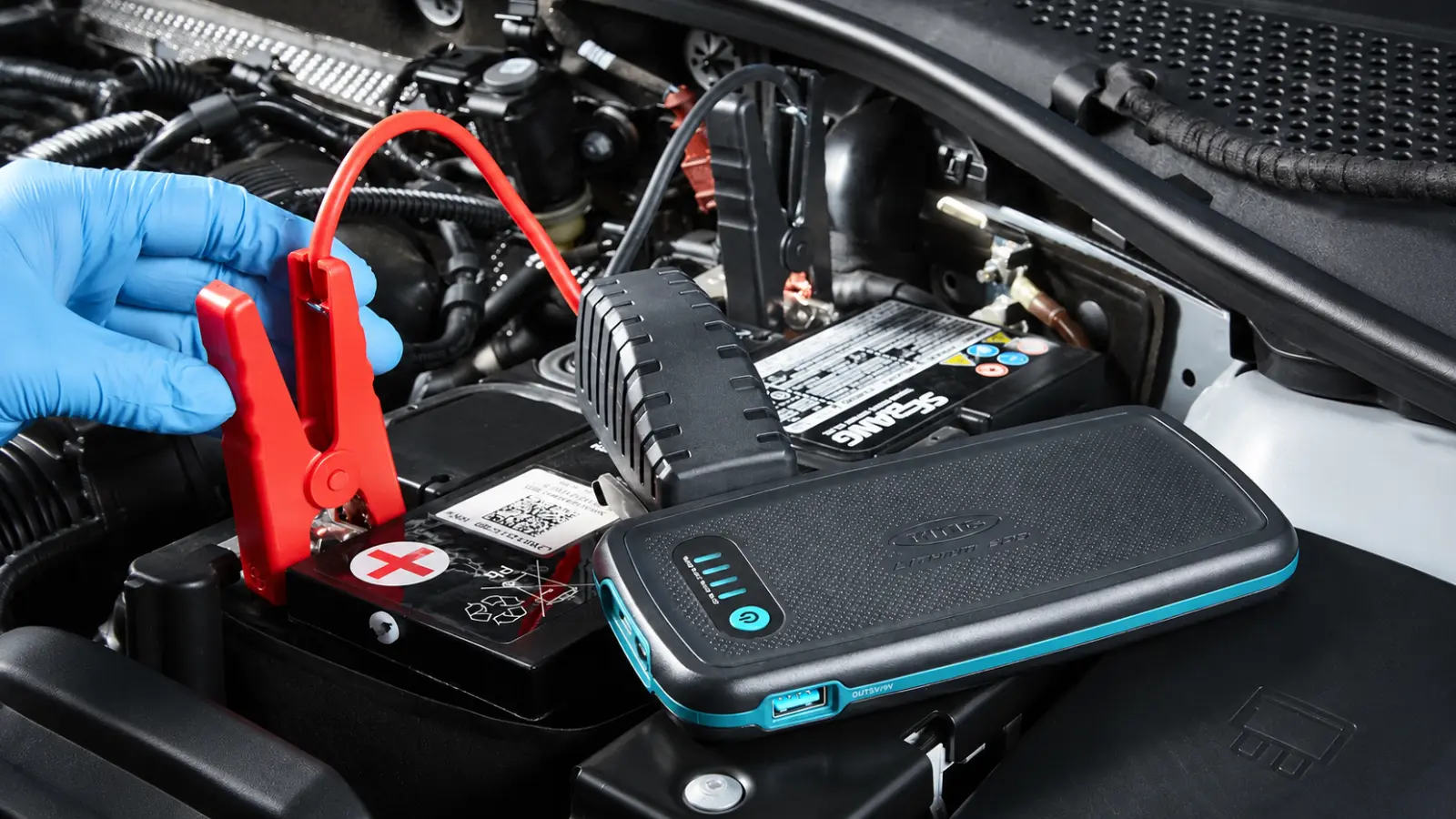
A jump box is a portable car jump starter that provides the power needed to start a vehicle with a weak or discharged 12-volt battery, without relying on another car. Also called a jump pack or battery booster, it can be especially useful when your car won’t start at home, in a parking lot, or somewhere roadside assistance isn’t immediately available.
Unlike traditional jumper cables, a jump box carries its own power source. However, it must be compatible with your vehicle, sufficiently charged, and connected according to the manufacturer’s instructions. It also isn’t a substitute for a battery charger or a proper battery test. Getting the engine running doesn’t necessarily mean the battery or charging system is healthy.
In this guide, you’ll learn what a jump box does, how to use one safely, and how it compares with jumper cables. You’ll also find out what to check before buying a portable jump starter, why peak amp ratings don’t tell the whole story, and what to do after your engine starts.
What a Jump Box Does and Does Not Do
A jump box is a self-contained power source with clamps or a dedicated cable set. Connected as its manual directs, it supports the starting system long enough for a start attempt. Unlike jumper cables, it does not need another running vehicle.
It does not restore a full charge, measure battery capacity, repair internal damage, or find the reason the battery went flat. AAA notes that a jump cannot revive a battery that is too old or has failed internally. If the battery is low again after the event, that cause still needs attention.
“Jump box,” “jump pack,” and “car battery jump starter” usually mean the same category, but supported vehicles vary by model. A clamp that fits your terminals does not show the pack suits your vehicle.
Jump Box or Jumper Cables?
A jump box makes sense if you often drive alone, park in places with little traffic, or want a start option that does not depend on a stranger. Jumper cables cost less and never run out of charge, but they need a second vehicle with a working 12-volt battery. Either way the same limits apply: neither tool diagnoses the problem.
If a second vehicle is available and you prefer cables, the procedure and connection order are in how to jump-start a car safely and the jumper cable connection order. This page covers the portable pack.
When a Jump Box Is Appropriate
A jump box is appropriate when the vehicle has a low 12-volt battery, the vehicle manual allows a jump-start, the pack is charged and undamaged, and nothing on the battery tells you to stop. It helps most away from home, where a wall charger or donor vehicle may not be available.
If the car is stopped in a travel lane or on a narrow shoulder, personal safety comes before the jump. Turn on the hazard lights, move away from traffic, and call roadside help if you cannot work safely. If the car will not start and you are unsure why, what to do first with a dead car battery covers the checks that come before a jump.
Hybrids and EVs need extra care. They usually have a low-voltage 12-volt battery that can be jumped in some models, but the correct points and restrictions are vehicle-specific, and AAA warns that jumping can damage many of them. Use only what the vehicle manual allows, and never touch high-voltage components or orange cabling.
How to Use a Jump Box Safely
Do not jump a battery that is cracked, bulging, leaking, frozen, unusually hot, or giving off a strong rotten-egg smell. Leaking acid and explosive gas make that battery a hazard. It needs replacement or service, not a jump. Also stop if the pack itself is swollen, damaged, or hot.
The exact sequence belongs to your vehicle manual and your pack’s manual, because jump points and controls differ. This is the common pattern for a permitted 12-volt jump, not a replacement for those instructions.
- Make the scene safe. Park on level ground if possible, set the parking brake, and turn the vehicle off. Switch off lights, climate control, and other electrical loads. Remove loose jewelry and keep flames and sparks away.
- Read both manuals first. Find the vehicle’s jump-start section and any designated positive jump point or remote terminal. Many vehicles with the battery in the trunk or under a seat use these. Note the pack’s connection order and indicator meanings.
- Check the pack. Confirm it shows enough charge per its manual, is switched off if it has a power button, and has no cracked case or frayed leads. Keep the clamps from touching each other.
- Inspect the battery. Look for the damage listed above. If anything is wrong, stop here.
- Connect the red (positive) clamp to the positive terminal or the designated positive jump point. Make sure it grips clean metal firmly.
- Connect the black (negative) clamp where the manuals specify. Some call for the battery’s negative terminal. Many jump-start instructions instead call for a bare, unpainted metal point on the engine or chassis away from the battery, so any spark happens away from battery gas. If the vehicle manual names a ground point, use that one.
- Check the pack’s indicator. A fault or reversed-polarity light means disconnect and recheck. Switch the pack on only if its manual says to.
- Try a short start. Crank for the time the pack’s manual allows, then rest before trying again. If the engine does not catch after a few tries, stop, recheck every connection and the pack’s charge, and consider that the problem may not be the battery.
- Remove the pack in the documented order. Once the engine runs, the usual sequence is the reverse of how you connected: black clamp first, then red. Keep the clamps clear of belts, fans, and each other, and leave the engine running.
Do not use a boost or override function as a first response to a no-start. These modes can switch off the pack’s protections, so they belong only where the pack’s manual describes them and you are certain of polarity and battery condition. If the pack will not deliver power, stop and call for help.
What to Do After the Engine Starts
The car is running, but the problem is not solved. The battery may still be low or weak, charging may be faulty, or something may be draining it while parked. Keep the vehicle running and treat the next hour as a test.
AAA suggests driving for roughly 20 to 30 minutes with the air conditioning and rear defroster off, so the alternator can put charge back. That helps, but it is not a full recharge and says nothing about battery health. A proper charger restores charge more completely, and a battery test is the only way to separate state of charge from battery health. See how to test a car battery.
If it happens again, write down the pattern before you replace anything: how long the car sat, whether it clicked or did not crank at all, any warning lights, the battery’s age, and what the pack’s indicator showed. That evidence matters most to the diagnosis in why a car battery keeps dying. Avoid disconnecting the battery to “reset” things first, because that can erase useful information.
What to Check Before You Buy One
Compare a jump starter by the job it can safely do for your vehicle, not by its largest marketing number or its extra features. The first check is always the manufacturer’s stated vehicle and engine scope.
| What to Check | Why It Matters | Where to Verify |
|---|---|---|
| Vehicle and engine scope | Makers often state supported engine sizes separately for gasoline and diesel, and many are for 12-volt systems only | The pack’s manual or spec sheet, checked against your engine and system voltage |
| Peak-current rating | One advertised figure, not always stated under comparable conditions | Supported vehicle scope and any stated conditions in the manual |
| Safety protections | Reversed clamps and shorts are common mistakes, so protections help catch them | Protections and fault lights the manual actually lists |
| Clamps and cable reach | Poor contact or short leads make a safe connection harder | Whether the leads reach your vehicle’s approved points without crossing moving parts |
| Recharge and storage rules | An empty or heat-damaged pack cannot help you | The maker’s recharge schedule and storage temperature limits |
| Built-in air compressor | Handy for a soft tire, but a separate feature from jumping | Run time, pressure display, hose reach, and your tire placard pressure |
On peak amps: do not equate the number with your battery’s CCA rating, a charger’s output, or a promise of how many starts a pack will deliver. They measure different things. A pack that is compatible, charged, and connected correctly is worth more than a bigger number on the box.
Storage, Charging and Compressor Extras
A jump box needs its own upkeep. Many modern packs use lithium-ion cells, while older or heavier ones may be lead-acid, and their storage rules differ. Follow the maker’s schedule for charging and inspection, and do not assume a pack left untouched in the trunk will still be ready months later.
Heat, cold, moisture, and crushing can all damage portable packs. Store it where the manual allows, check the case, leads, and indicator before relying on it, and recharge it after use if the manual says to. If it is swollen, hot, or showing a fault, stop using it.
If your pack has an air compressor, use the pressure on the vehicle’s tire placard, not the maximum printed on the tire sidewall. Stop for any tire damage that needs a repair or roadside service. The compressor does not make the pack a tire-repair kit.
Is a Jump Box Worth Keeping in Your Car?
A jump box can be a useful emergency tool, especially if you want a way to jump-start your car without needing another vehicle. The key is choosing a model that supports your vehicle’s electrical system and engine size, keeping it charged, and following both the vehicle and jump starter manuals. Safety features, reliable clamps, and proper storage matter more than an impressive peak amp rating alone.
If your car starts with a jump box, don’t assume the underlying problem has been fixed. The battery may still need a full recharge, testing, or replacement, and a charging-system problem could leave you stranded again. Treat the jump box as a practical backup for unexpected starting problems, not a permanent solution to a battery that keeps going dead.
Frequently Asked Questions
What is a jump box, and how does it work?
A jump box is a portable power pack that supplies a short burst of electricity to help start a vehicle with a weak 12-volt battery. Unlike jumper cables, it does not require another vehicle. It provides starting assistance but does not fully recharge or repair the battery.
How do you use a portable jump starter safely?
Turn off the vehicle and confirm that the jump starter is compatible. Following both manuals, connect the red clamp to the designated positive (+) point and the black clamp to the approved negative or ground point. Start the vehicle as instructed, then disconnect the clamps in the specified order.
What size jump box do I need for my car?
Choose a jump box rated for your vehicle’s voltage, engine size, and fuel type. Manufacturers often specify supported gasoline and diesel engine sizes. Do not rely on advertised peak amps alone, since those ratings are not always directly comparable.
Can a portable jump starter damage your car?
Yes. Incorrect polarity, improper connection points, incompatible equipment, or bypassed safety protections can damage electrical components. Use a compatible jump starter, verify the connections, and follow the vehicle and jump starter manuals.
Why won’t my car start with a jump box?
Possible causes include an insufficiently charged jump box, poor clamp contact, incorrect connection points, a severely damaged battery, or a problem unrelated to battery power. Check the pack’s fault indicators and connections, and stop repeated attempts if the engine still will not start.
How often should I charge a jump box stored in my car?
Follow the manufacturer’s charging schedule, since battery chemistry and standby discharge vary between models. Check its charge before long trips and after use, and store it within the specified temperature limits. Avoid leaving it in extreme heat or cold if the manual prohibits it.