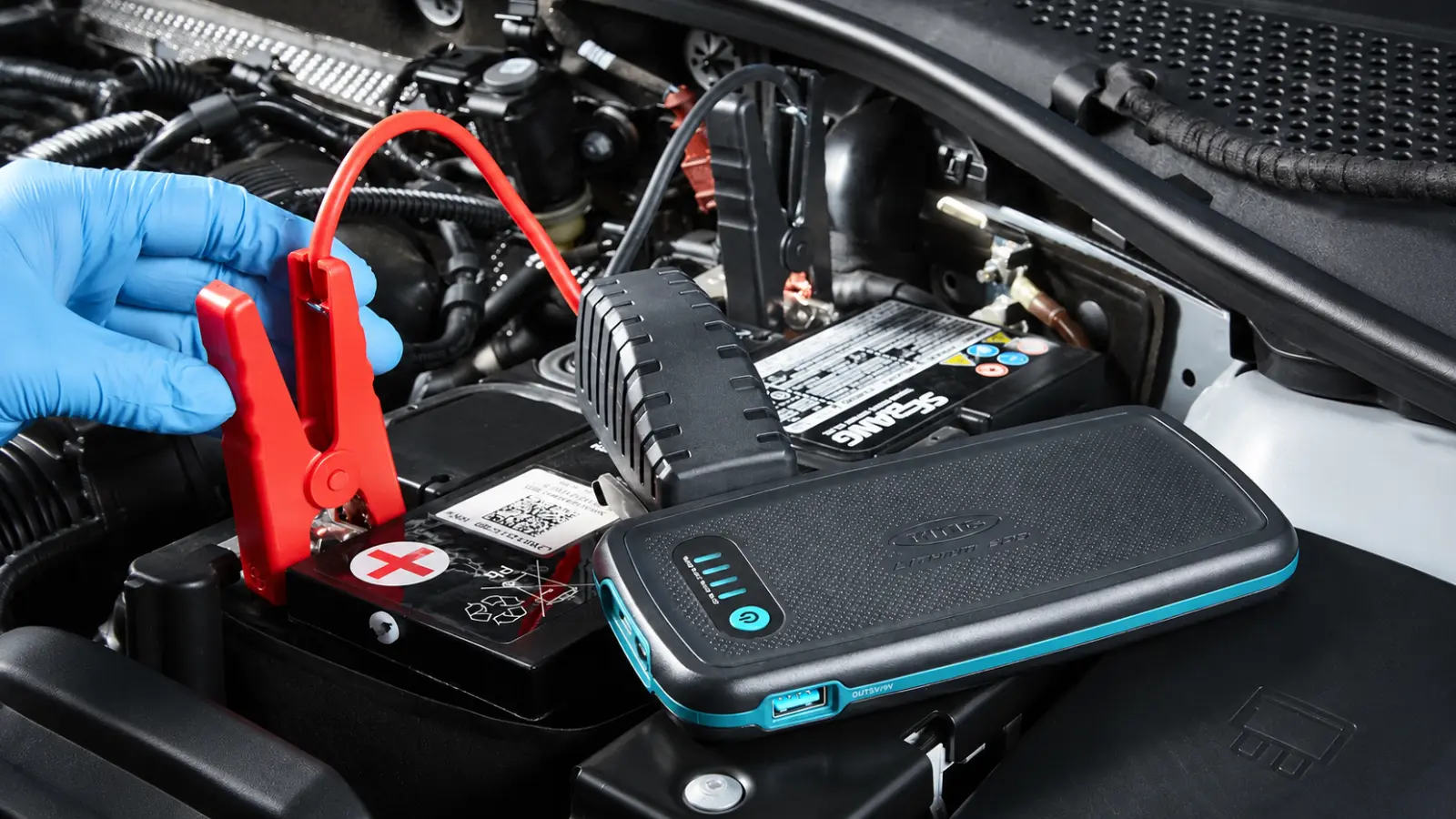


Knowing how to test a car battery can help you figure out whether a slow start, repeated jump-start, or unexpected no-start is caused by a low charge or a battery that is wearing out. You can begin with a digital multimeter at home, and many auto-parts stores in the United States also offer free battery testing.
The important distinction is that battery voltage and battery health are not the same thing. A multimeter can help estimate how charged a rested 12-volt battery is, but a normal voltage reading does not guarantee that it can deliver enough power to start the engine. An electronic battery tester or professional load test can provide a better assessment of its starting condition.
In this guide, you’ll learn how to inspect a car battery safely, measure its voltage with a multimeter, interpret the readings, and understand what different battery tests can tell you. You’ll also see how to get a free battery test and decide whether the next step is charging, retesting, further diagnosis, or replacement.
Start With Safety and a Quick Inspection
Do not connect a meter or tester to a battery that is cracked, leaking, swollen, smoking, very hot, or giving off a strong sulfur odor. Stop, keep sparks and flames away, and arrange qualified help. No test result is worth the risk around a damaged battery.
For a normal-looking battery, work with the ignition and accessories off, wear eye protection, and take off metal jewelry, since a ring or watch touching a positive terminal can cause a severe burn. If the battery is under a cover, in the trunk, or beneath a seat, or if the car is a hybrid or has a battery-management system, check the owner’s manual before touching anything.
Then look over the battery and its surroundings:
- Case and hold-down: Look for cracks, bulging, or leakage, and make sure the battery is held firmly in place.
- Terminals and cable ends: Loose or heavily corroded connections can restrict current and mimic a weak battery, so you may end up testing the connection rather than the battery. Sort out visible problems first, then test.
- The label: Note the battery type (flooded, AGM, or EFB), its cold cranking amps (CCA) rating, and the standard that rating uses. Testers need these. Car Battery CCA explains what the number means.
- Age: Many batteries carry a date code. AAA advises having a battery tested if it is more than three years old or has been struggling.
If the battery is sealed, there are no caps to open and no electrolyte to check, which is why voltage and electronic tests matter more. Maintenance-Free Car Batteries covers what that means in practice.
Which Test Answers Which Question
The right test depends on the question you are asking. A meter answers “how charged is it?” A properly configured tester answers “can it still start the car?” Neither explains why a battery ran down in the first place.
| Test | Who Usually Does It | What It Can Show | What It Cannot Show |
|---|---|---|---|
| Visual inspection | You | Damage, leaks, corrosion, loose cables, an insecure hold-down | Internal battery health |
| Multimeter voltage check | You, with an inexpensive meter | State of charge, when the battery has rested | Cranking ability, remaining capacity, or the condition of the starter or alternator |
| Electronic (conductance) tester | Parts stores and shops, or a handheld unit | An estimate of starting health, using a very brief small load, when type and rating are entered correctly | Why the battery discharged, or every electrical fault in the car |
| Load test | Shops | How the battery holds up under a defined electrical demand | Anything useful on a battery that is not adequately charged |
| Starting and charging system test | Shops and many parts stores | Whether the starter and charging system need a closer look | That the alternator alone explains a dead battery |
Midtronics, a major tester manufacturer, notes that load testers are slower, need a charged battery, and stress the battery being tested. Use the table as a map: voltage first for charge, an electronic test for health, and a charging-system test when the battery checks out but the problem remains.
How to Test a Battery With a Multimeter
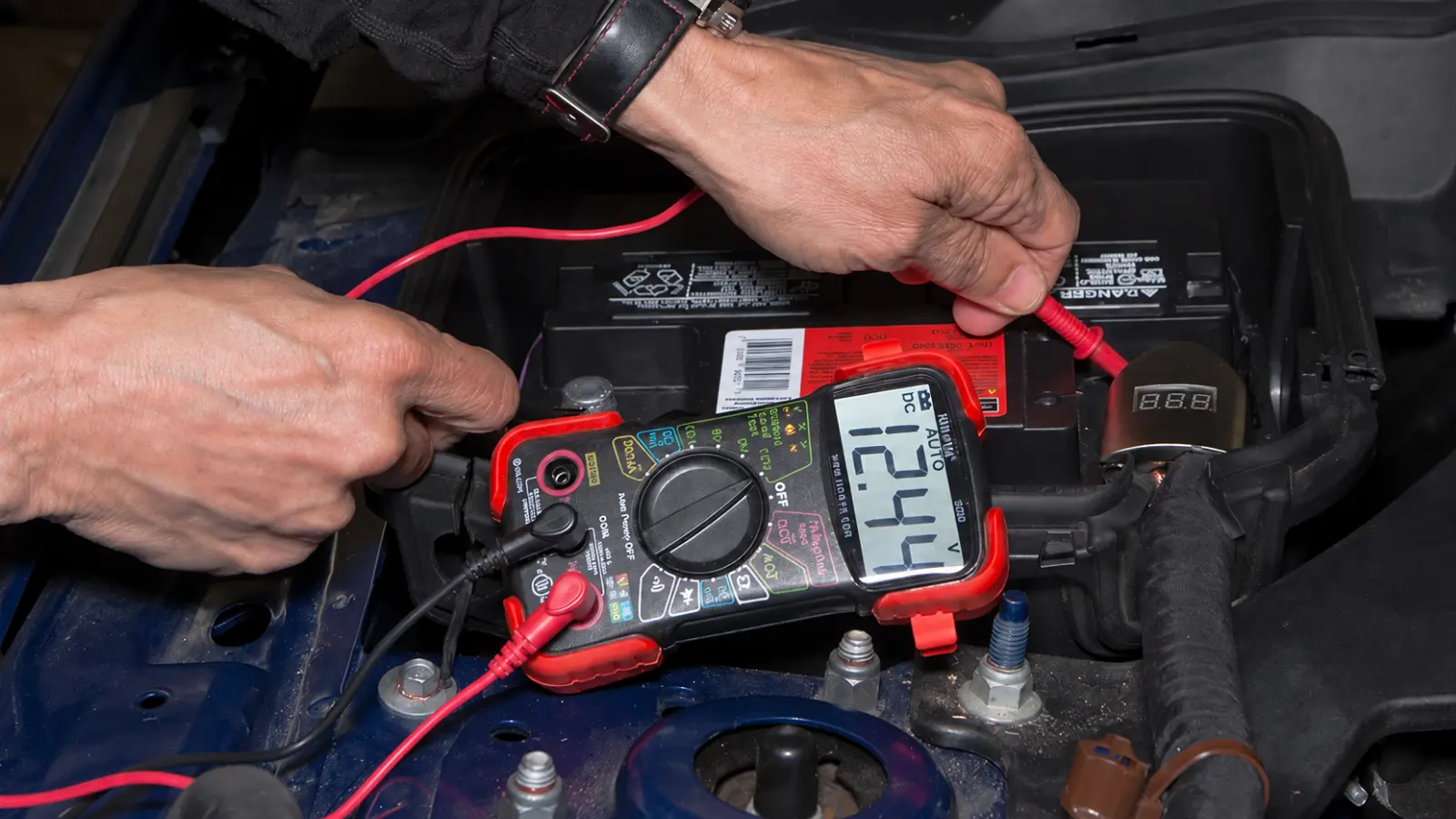
This is an easy check on a battery you can reach safely, and it takes about five minutes once the battery has rested. You need a digital multimeter, eye protection, and a few minutes. If the battery is remote, covered, or part of a battery-management setup, skip to a store or shop test instead.
- Let the battery rest. Right after driving or charging, a battery shows a falsely high “surface charge.” Ideally let the car sit with everything off for several hours or overnight. Guidance on exact timing varies, and a shop tester can work around it when you cannot wait.
- Prepare the car. Ignition and accessories off, doors closed, jewelry off, eye protection on.
- Set the meter. Choose DC voltage (usually marked V with a straight line) on a range that covers at least 20 volts.
- Connect the probes. Touch the red probe to the positive (+) terminal and the black probe to the negative (−) terminal, using the battery terminals when they are safely accessible. If the battery is located in the trunk, cabin, or another hard-to-reach area, consult the owner’s manual for approved testing points. Some vehicles allow voltage checks at designated remote terminals, but these readings may not identify problems with the battery connections or cables.
- Record the reading, along with the battery label details and how long the car had been sitting.
Now compare the number with a reference for the right battery type. VARTA, a major battery manufacturer, gives these figures for a conventional flooded starting battery:
| Rested Reading | What It Suggests | Next Step |
|---|---|---|
| About 12.8 V | An ideal, well-charged conventional battery | If the car still cranks slowly or fails to start, get a health test |
| Below 12.4 V | A battery that should be recharged as soon as possible | Charge it, rest it, then retest, and look at why it ran down |
| Well below 12.4 V | A deeply discharged battery, which may or may not recover | Charge it if it is undamaged, then get a health test |
Treat these as a rule of thumb for conventional batteries, not a pass-or-fail line. AGM, EFB, and start-stop batteries have their own references, and the battery or tester manufacturer’s chart controls. A good voltage tells you the battery is charged, nothing more. A reading with the engine running measures the charging system rather than the battery, and Bad Battery or Bad Alternator? picks up from there.
Getting the Most From a Free Battery Test
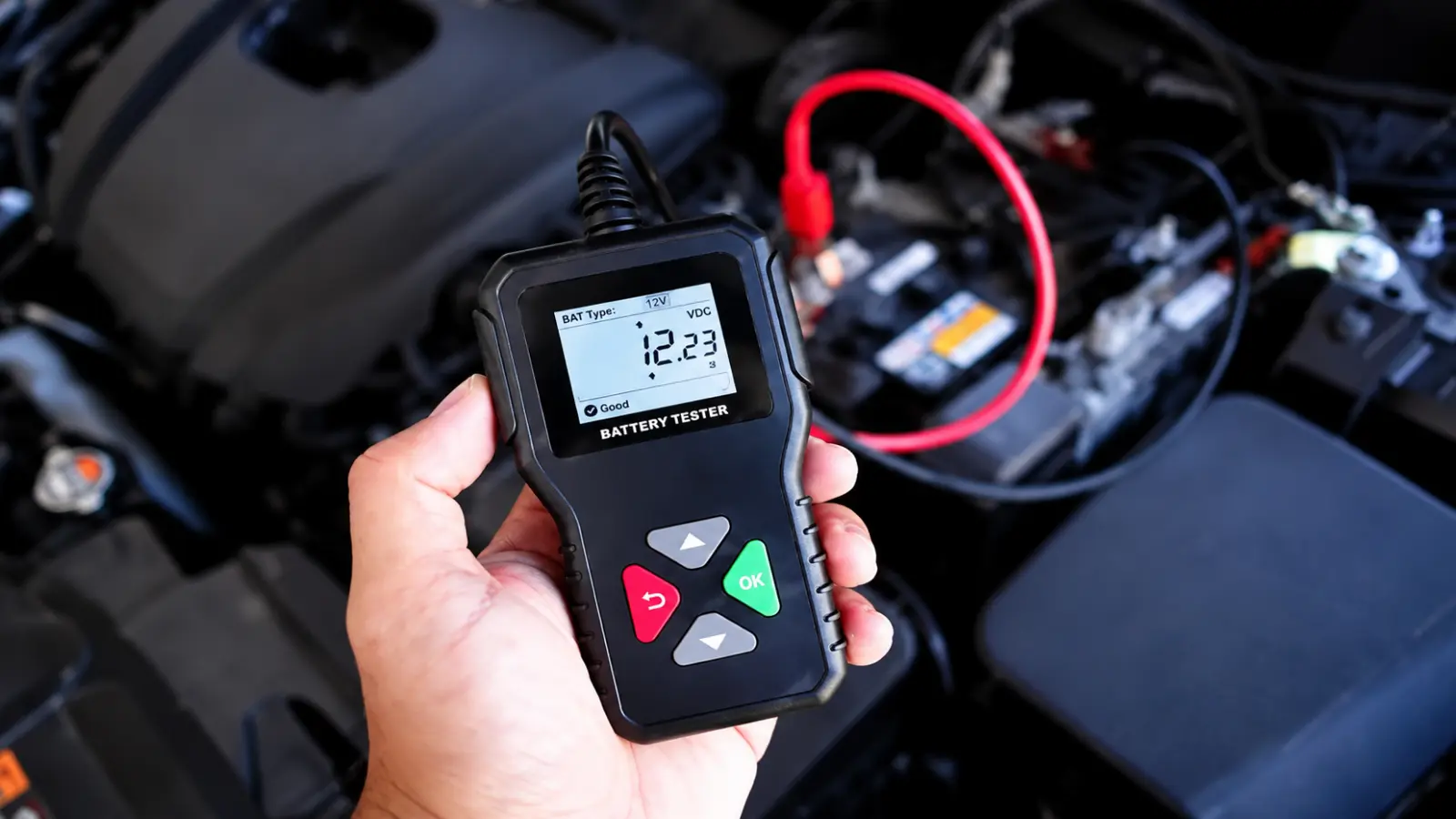
Many U.S. auto-parts retailers advertise free battery testing at most of their stores. Scope varies by location, including whether they test the battery in the car, whether they also check the starter and charging system, and which battery types they can handle, so call ahead if you are unsure.
The quality of the result depends on how the tester is set up. VARTA notes that testers use a different algorithm for each battery type and need the battery’s rated CCA and rating standard entered, so a wrong setting produces a wrong result. Bring or photograph the battery label, then ask:
- Was the tester set to this battery’s type, CCA, and rating standard?
- Is the battery charged enough for a reliable result, or should it be charged and retested first?
- Can I have a printout or photo of the report?
- Does this include a starting and charging system check?
A free test is a screening tool, not an obligation to buy. If the result conflicts with how the car behaves, or the battery could not be tested properly in place, get a second opinion from a shop that can run the follow-up test.
What to Do With the Result
A result is only useful if it points to an action. Charge before judging, because a low battery can look worse than it is, and keep the report either way, since it helps any technician who sees the car next.
| Result | What It May Mean | Next Step |
|---|---|---|
| Damaged, swollen, or leaking battery | A battery that is unsafe to test or charge | Stop and arrange professional help |
| Low charge, good health after charging | The battery is serviceable and something drained it | Look at short trips, accessories, or a parked draw; see Why a Car Battery Keeps Dying |
| Weak result even after charging | A battery near the end of its life | Plan a replacement; see How to Choose the Right Car Battery and Car Battery Replacement Cost |
| Battery passes, symptoms continue | A connection, starter, charging, or other issue | Check connections, then see Bad Battery or Bad Alternator?; if the engine will not crank after a jump, see Car Won’t Jump Start |
| Results conflict or the battery is hard to reach | A setup, charge, or access problem | Get a professional test, which is also the safer choice for AGM, EFB, auxiliary, hybrid, or battery-management systems |
If you charge the battery first, use a charger compatible with its type and follow the manual; How to Charge a Car Battery Safely covers the process. Never charge a damaged, frozen, or very hot battery. After charging, let it rest and test again, and keep both results rather than choosing the one you prefer.
What Your Car Battery Test Results Mean
Testing a car battery is about understanding more than one voltage reading. Start with a visual inspection, use a multimeter to check the battery’s resting voltage, and compare the result with the appropriate reference for its type. If the battery is discharged, it may need to be charged and tested again before you can judge its condition. A properly configured electronic battery tester can help determine whether it still has enough starting capability.
If the battery passes but the car continues to have starting problems, the next step is to investigate the connections, starter, or charging system rather than replacing the battery unnecessarily. Whether you test at home or use a free service at an auto-parts store, the goal is the same: use reliable results to decide what actually needs attention.
Frequently Asked Questions
How do you test a car battery with a multimeter?
Turn off the engine and accessories, let the battery rest, and set the multimeter to DC voltage. Touch the red probe to the positive (+) terminal and the black probe to the negative (−) terminal. The reading helps estimate the battery’s charge, not its overall health.
What voltage should a healthy car battery read?
A fully charged conventional 12-volt flooded battery typically reads around 12.6–12.8 volts at rest. A reading below 12.4 volts generally indicates that recharging is needed. Exact values vary by battery type and temperature.
Can a car battery show 12 volts and still be bad?
Yes. A battery can have a reasonable voltage reading but lack enough cranking power to start the engine. An electronic battery tester or professional load test can better assess its starting capability.
Where can I get a free car battery test?
Many U.S. auto-parts stores, including AutoZone and Advance Auto Parts, offer free battery testing at participating locations. Call ahead to confirm availability and ask whether the service includes starting and charging-system checks.
How do I know if my car battery needs to be replaced?
A battery that remains weak after proper charging or fails a correctly performed health test may need replacement. Slow cranking, repeated jump-starts, and starting problems are warning signs, but testing helps confirm the cause.
Can a battery test tell if the alternator is bad?
Not by itself. A battery test evaluates charge or starting capability, while a charging-system test checks whether the vehicle is properly replenishing the battery. Both may be necessary when the battery repeatedly dies.