


Is it a bad battery or bad alternator causing your car to struggle to start, lose electrical power, or keep dying? A weak battery often causes slow cranking, clicking, or trouble starting after the car has been parked. A failing alternator is more likely to cause charging warnings, dimming lights, or electrical problems while the engine is running. However, these symptoms can overlap, so neither pattern confirms the problem on its own.
The battery provides the power needed to start the engine, while the alternator supplies electricity and recharges the battery as the engine runs. If the alternator stops charging properly, even a healthy battery can eventually go dead. Likewise, a worn battery or poor electrical connection can create symptoms that resemble a charging-system failure.
This guide compares the warning signs of a bad battery and a bad alternator, explains how to check the battery and charging voltage, and shows which tests to perform before replacing either component. You’ll also learn when it may be unsafe to keep driving and why a proper diagnosis matters when both parts appear to be failing.
What the Battery and Alternator Each Do
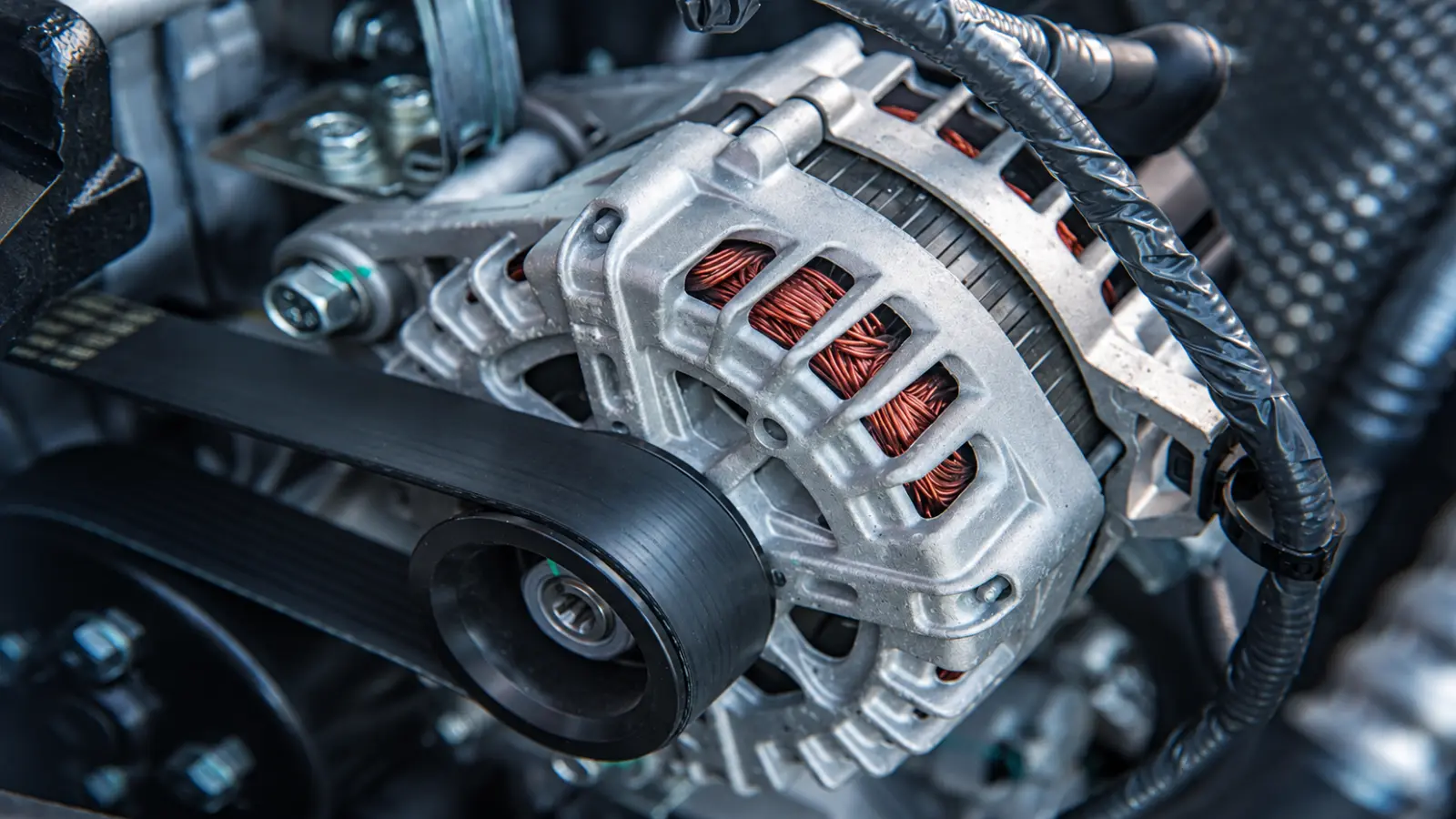
The battery supplies the high current needed to crank the engine and runs the electrical system while the engine is off. AAA describes the alternator as turning engine power into electricity that recharges the battery and feeds the car’s electrical system while the engine runs.
Modern systems add a wrinkle. Many vehicles use smart charging, which varies alternator output with battery condition, electrical demand, and temperature, so “about 14 volts, always” is no longer a safe assumption. The Car Battery Guide covers how the pieces fit together.
This page covers vehicles with an engine-driven alternator. Hybrids and EVs typically keep their 12-volt battery topped up through a DC-to-DC converter instead, and they need their manufacturer’s guidance.
Symptoms That Lean Toward Each Part
Pay attention to when the symptom happens: before starting, right after a jump, while driving, or after the car sits. Timing is often more useful than a general description such as “the battery went dead.”
| What You Notice | Leans Toward, and Why | Best Next Check |
|---|---|---|
| Slow or clicking start after the car has sat | Battery. A low or worn battery, or poor terminal contact, shows up first at the starter. A charging fault may have run it down earlier. | Battery test; if the engine will not crank, see Car Won’t Jump Start |
| Starts with a jump, then stalls soon after the cables come off | Charging system. AAA says this pattern means the alternator may not be keeping the car running. A battery that cannot hold charge can also do it. | Battery test, then a charging-system test |
| Starts with a jump, runs fine, but will not restart later | Battery or a drain. The car was charging while it ran, so a battery that will not hold charge, or a parked draw, fits better. | Battery test; see Why a Car Battery Keeps Dying |
| Battery or low-voltage light on while driving | The electrical system, not necessarily the battery. AAA notes the icon can point to the battery, the alternator, or another component. | Follow the owner’s manual and arrange a charging-system check |
| Lights dim or brighten with engine speed, a whine, or radio static | Charging system. AAA lists these as alternator signs, though a whine or growl can also come from a worn belt or another belt-driven part. | Charging-system test and a belt check |
| Electrical features fade or the engine stalls while driving | Charging system. The battery may be carrying the load without being recharged. | Stop safely and get professional help |
| Burning rubber or hot-wire smell with the engine running | Charging system or belt. AAA says a failing alternator can overcharge the battery, which can produce this smell. | Stop safely and get professional help |
| A new battery keeps going flat | Not the battery. Look at charging, a parked draw, or connections. | Charging-system test and a parked-draw check |
Notice how often one symptom fits two parts. That overlap is why the next check matters more than choosing the most familiar explanation. A swollen case, a rotten-egg smell, or heavy corrosion is a different story: it points to battery damage, and the battery should not be tested, charged, or jumped.
Test in the Right Order
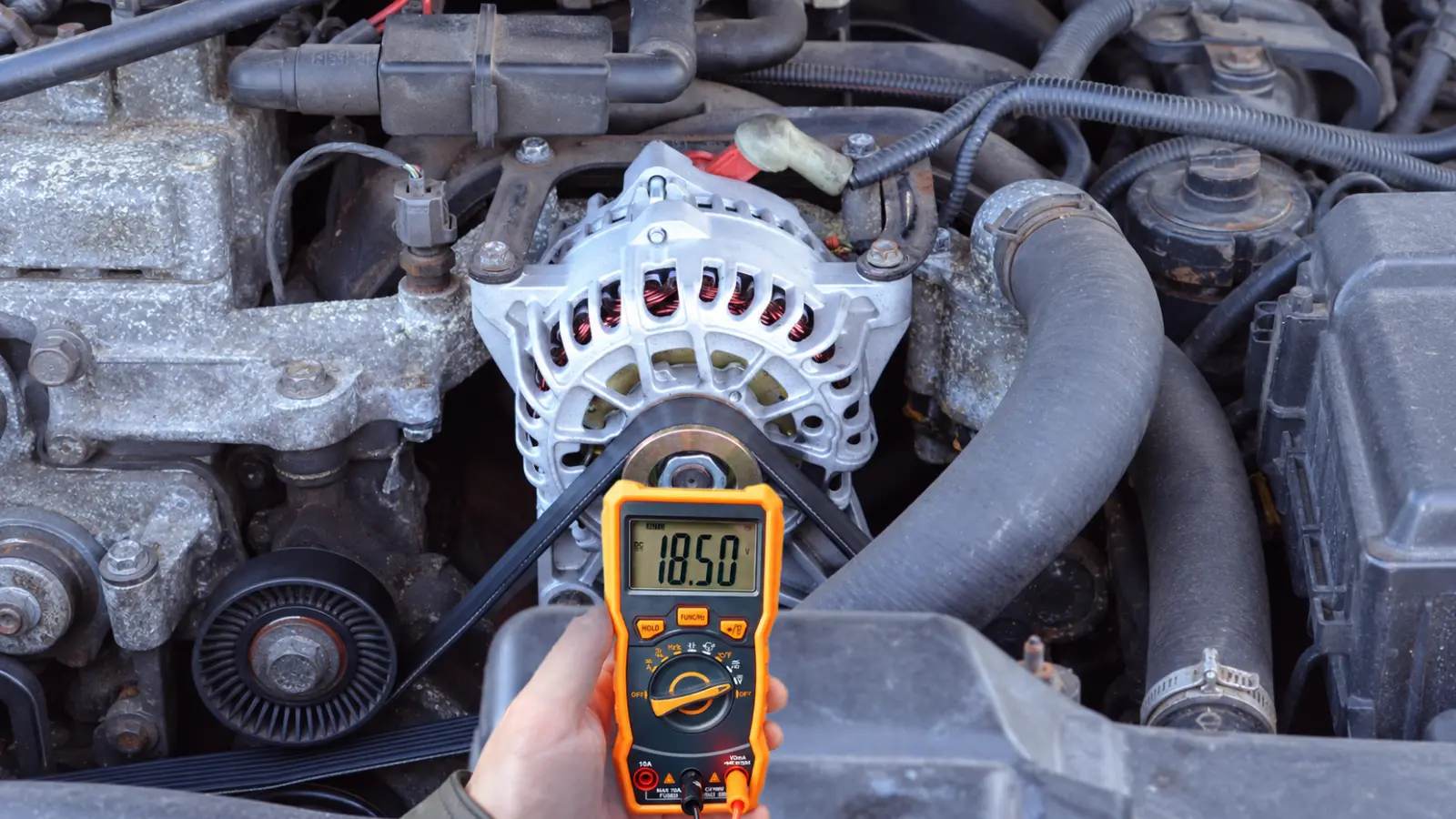
Work through these steps in order, and stop wherever a step finds the problem. AAA’s own advice is to check the battery first, then move to the alternator if the battery turns up nothing or is relatively new.
- Look first, with the engine off. Check for obvious belt damage such as cracks, fraying, or missing material, plus loose or corroded battery terminals and an unsecured battery. Do not reach around a running engine or try to adjust a belt, and do not use a visual check to call the alternator good or bad.
- Test the battery. Use the correct method for the battery type, as explained in How to Test a Car Battery. If the battery is low, charge it and retest before judging anything else; How to Charge a Car Battery Safely covers that. Midtronics notes that some test methods need a charged battery to be meaningful.
- Check charging voltage, if you can do it safely. With a multimeter on the battery terminals and the engine running at idle, AAA treats 13 to 14.5 volts as a charging system that is doing its job, and any other reading as over- or under-charging. Keep probes, hands, and clothing clear of belts and fans, and skip this step if the battery is hard to reach.
- Get a charging-system test when the evidence points there. A shop can test under load and check parts you cannot see, such as the alternator’s diodes, which AAA notes convert the engine’s alternating current to the battery’s direct current.
Treat the voltage figures as a rule of thumb for a conventional system, not a specification. Delphi notes that smart charging output varies, so a lower reading can simply mean the battery is already charged. What does raise a flag is a running reading that stays no higher than the battery’s resting voltage, or one that is far above the normal range. A normal reading also does not rule out an intermittent fault, so keep the symptom history and any test printouts for the technician.
Why Both Can Test Low
Because the two parts depend on each other, a problem in one can show up in the other. A charging fault can leave a good battery undercharged, so it tests low even though it was not the original failure. A tired battery can pull the electrical system down and mimic charging trouble.
Corroded terminals, loose cables, and a slipping belt can complicate either result, and age is only context. AAA puts typical battery life at three to five years and alternator life at seven to ten, but age alone proves nothing.
That is why “bad battery or bad alternator” is not always a clean either/or. Fix and retest in order, and let each result decide the next step.
Can You Keep Driving?
It is not a good idea. AAA says you can drive with a bad alternator but should not, since it can overcharge and damage the battery and the car can stall when the battery runs down. With a charging fault, the car is running on battery reserve, and there is no reliable way to know how long that will last.
If a charging warning appears, follow the owner’s manual, turn off nonessential electrical loads, and head directly to a safe place or a shop rather than finishing errands. Stop safely and call for help if lights dim, electrical features fade, the engine stumbles or stalls, or you smell burning rubber or hot wire. A car that is shut off in that condition may not restart, so choose where you stop. If you need a jump to get going, see How to Jump-Start a Car Safely, and remember that a jump is temporary power, not a diagnosis.
Who Should Fix It and What It May Cost
Battery replacement is a job many owners can do when the battery is accessible and undamaged. An alternator is usually trickier to reach, and AAA suggests leaving it to professionals. A swollen, leaking, or hot battery should also go to a professional.
Cost is another reason to test before buying parts. AAA’s published planning ranges are roughly $45 to $250 for a battery and $500 to $2,500 for an alternator including parts and labor. Real prices vary with the vehicle, battery type, access, labor rates, and whether the part is OEM or aftermarket. Car Battery Replacement Cost explains what moves the battery total, and How to Choose the Right Car Battery covers what to match if the test calls for one.
How to Know Whether the Battery or Alternator Is Bad
The best way to distinguish a bad battery from a bad alternator is to combine the symptoms with the right tests. Slow cranking or clicking after the car has been parked may point toward the battery, while charging warnings, fading electrical power, or stalling while driving raise concern about the alternator or charging system. Neither pattern is definitive, especially when a charging problem has already drained the battery.
Start by inspecting the connections and checking the battery’s condition. If it is discharged, charge and retest it before drawing conclusions. Then have the charging system evaluated when the symptoms or test results indicate a problem. If the vehicle is losing electrical power while driving, stop safely and arrange assistance rather than risking a breakdown. Testing both systems in the correct order can help prevent unnecessary repairs and identify the actual cause.
Frequently Asked Questions
How can I tell if my battery or alternator is bad?
Slow cranking or clicking after the car sits often points to a weak battery. Stalling while driving, fading electrical systems, or a charging warning light may indicate an alternator problem. Testing both systems is the most reliable way to identify the cause.
Can a bad alternator drain a good battery?
Yes. A failing alternator may not recharge the battery while the engine runs, eventually leaving it discharged. Some alternator faults can also cause an electrical drain while the vehicle is parked.
What voltage should an alternator produce?
Conventional charging systems commonly measure around 13–14.5 volts with the engine running. However, smart charging systems can operate outside that range under normal conditions, so voltage alone cannot confirm alternator health.
Can you jump-start a car with a bad alternator?
Sometimes. A jump-start may provide enough power to start the engine, but the vehicle can stall once the battery’s remaining charge is depleted. A successful jump-start does not mean the charging system is working.
Does the battery warning light mean the alternator is bad?
Not necessarily. The warning light indicates a charging-system concern that may involve the alternator, wiring, belt, or other electrical components. Follow the owner’s manual and arrange a charging-system inspection promptly.
Should I replace the battery or alternator first?
Neither without testing. Inspect the connections, test the battery, and recharge and retest it if necessary. Then check the charging system to determine which component actually needs attention.


